What Is AEO for B2B Companies and Why It Matters in 2026
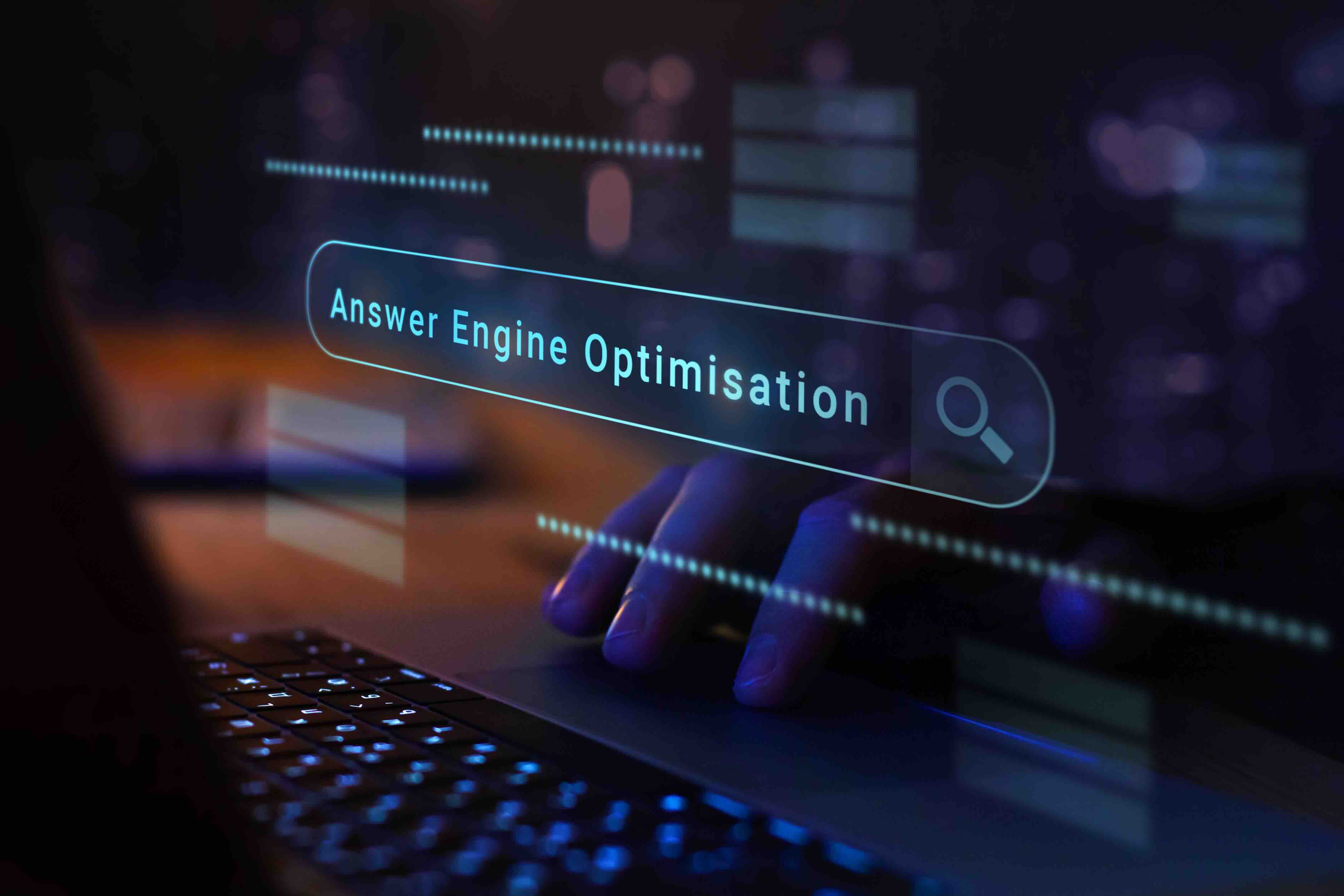
Answer Engine Optimization, or AEO, is not a concept that showed up overnight. It has been building quietly in the background as AI-powered search tools, voice assistants, and large language models have started reshaping how buyers find information. For B2B companies, and especially for marketing and creative agencies, AEO represents a meaningful shift in how content needs to be structured, written, and deployed. Where traditional SEO focuses on ranking a webpage in a list of search results, AEO focuses on positioning your content as the direct answer to a specific question, the kind of answer that gets surfaced inside a featured snippet, a conversational AI response, or a voice search result. In 2026, the distinction between showing up and being chosen as the answer is more commercially significant than it has ever been.
How AEO Actually Works: The Mechanics Behind the Strategy
At its core, AEO works by aligning your content with the way answer engines process and retrieve information. Search engines and AI platforms, including Google's AI Overviews, ChatGPT, Perplexity, and Microsoft Copilot, are built to retrieve the most contextually accurate, clearly structured response to a user's query. They favor content that is direct, authoritative, and semantically organized. For B2B companies, this means structuring content around question-and-answer formats, using schema markup such as FAQ schema and HowTo schema, and writing in a way that mirrors the natural language patterns of your target buyer's queries. Think about how a procurement manager or a VP of Marketing phrases a question when they are trying to solve a problem. AEO demands that your content speaks that language fluently and answers it cleanly, without ambiguity. The underlying technical infrastructure matters too. Page load speed, mobile responsiveness, structured data implementation, and clean crawlability all support AEO performance in ways that directly overlap with solid SEO fundamentals.
The B2B Buyer Journey Has Changed, and AEO Reflects That
B2B buying cycles are long and complex. They involve multiple stakeholders, layers of approval, and a great deal of independent research before anyone speaks to a sales rep. What AEO does for B2B companies is position your brand as a trusted knowledge resource at the earliest and most influential touchpoints in that research phase. When a decision-maker asks an AI assistant a question about marketing automation, agency selection criteria, or campaign attribution models, the brand whose content surfaces as the answer earns immediate credibility. That is not a small thing. In an environment where attention is scarce and trust is earned incrementally, being the source of the right answer at the right moment is a genuine competitive advantage. AEO for B2B companies is not just about traffic. It is about becoming part of the buyer's mental model before they even know they are evaluating vendors.
Key Advantages of AEO for B2B Marketing and Creative Agencies
Marketing and creative agencies operate in a crowded, competitive space. AEO offers several specific advantages that map well to how agencies typically grow and differentiate themselves.
- Increased visibility in zero-click environments where buyers get answers without visiting a website
- Stronger topical authority signals that support long-term organic search performance
- Better alignment between content strategy and actual buyer intent
- Improved brand recall through repeated appearance in AI-generated responses
- Higher quality lead generation because prospects arrive pre-educated and pre-qualified
- Competitive positioning in niche B2B verticals where search volume is lower but buyer intent is extremely high
- Reduced dependency on paid media for top-of-funnel awareness
Each of these advantages compounds over time. AEO is not a quick tactic. It is a content infrastructure investment that pays dividends in brand authority, organic discovery, and sales cycle efficiency. For agencies pitching their expertise to sophisticated B2B buyers, being surfaced as the answer engine's preferred source is one of the most powerful proof points of authority available.
What Types of Content Perform Best in AEO for B2B
Not all content is treated equally by answer engines. For B2B companies looking to optimize for AEO, the content types that tend to perform best share a few common characteristics. They are specific, they are structured, and they are written with a single clear intent. Long-form educational articles that answer one central question comprehensively tend to do well. So do FAQ pages built around real buyer questions, glossary-style content that defines industry terminology, comparison pages that objectively evaluate solutions, and step-by-step guides that walk through a process with clear logic and sequencing. For marketing and creative agencies in particular, case study content structured around specific outcomes, how-we-did-it frameworks, and industry benchmark explanations all represent strong AEO opportunities. The key is that every piece of content should be built around a question that your target buyer is actually asking, not a question you wish they were asking.
Common Drawbacks and Limitations of AEO to Understand
AEO is not without its complications, and it is worth being direct about the drawbacks before committing resources to the strategy. First, AEO does not guarantee traffic in the traditional sense. When your content is surfaced as a direct answer inside an AI response, the user may get what they need without ever clicking through to your website. This means that AEO can increase brand awareness and authority while simultaneously reducing measurable page visits, which creates a reporting challenge for teams still relying on session-based analytics to justify content ROI. Second, the landscape of answer engines is fragmented and evolving quickly. Optimizing for Google's AI Overviews involves different structural considerations than optimizing for Perplexity or ChatGPT, and the ranking logic for each platform is not fully transparent. Third, AEO requires a consistent, long-term content commitment. There is no shortcut to topical authority. Brands that publish sporadically or pivot their content focus frequently will struggle to build the semantic depth that answer engines reward. Finally, measurement frameworks for AEO are still maturing, which means attributing pipeline and revenue to AEO activity requires more nuance and patience than most teams are accustomed to.
Practical AEO Implementation Tips for B2B Companies
Getting started with AEO does not require a complete overhaul of your content strategy. It requires a deliberate recalibration of how you approach content creation and technical optimization. The most effective starting point is a thorough content audit to identify gaps between the questions your buyers are asking and the answers your current content provides. From there, prioritize content development around high-intent queries in your specific service category or industry vertical. Implement structured data markup wherever relevant, particularly FAQ schema, Article schema, and HowTo schema. Write in plain, direct language that mirrors conversational search patterns without sacrificing the technical depth that establishes credibility. Establish internal linking structures that connect related content so that answer engines can trace thematic coherence across your content library. And invest in E-E-A-T signals, which stands for Experience, Expertise, Authoritativeness, and Trustworthiness, because answer engines weight these signals heavily when determining which sources to cite. Author bios, credentials, client outcomes, and third-party validation all contribute meaningfully.
How AEO and SEO Work Together for B2B Growth
A common misconception is that AEO is replacing SEO. That is not accurate. The two disciplines are increasingly interdependent, especially for B2B companies with complex service offerings and multi-channel content strategies. Strong technical SEO, including site architecture, page speed, canonical tagging, and crawl efficiency, creates the foundation that AEO content needs to be discovered and indexed properly. Meanwhile, AEO-focused content, built around structured answers and semantic relevance, tends to enhance overall organic search performance by improving topical depth and engagement signals. Agencies that treat AEO and SEO as parallel workstreams rather than competing priorities tend to see compounding gains across both channels. The goal is a content ecosystem that performs well in traditional SERPs, earns featured snippet placement, and gets cited by AI-powered answer engines simultaneously. That level of visibility across multiple retrieval surfaces is what separates market leaders from everyone else in a competitive B2B space.
Why Kreativa Group Is the Right Partner for Your AEO Strategy
If AEO for your B2B company feels like a lot to manage on top of everything else you are already running, that is a completely reasonable reaction. It is a layered discipline that demands strategic content thinking, technical optimization expertise, and a clear-eyed understanding of how your buyers actually search for answers. That is exactly where Kreativa Group, a performance-driven marketing and creative agency, brings real value to the table. Based in Los Angeles and Miami, Kreativa Group has managed paid media and growth strategy for multi-billion dollar brands including Newegg, Rakuten, and Fossil Group, and has built digital experiences for globally recognized names like Sandals Resorts, Porsche, Audi, and BMW. The leadership team has navigated high-growth startup environments at companies like Misfit Wearables and HomeLister, taking them through successful exits. Cumulatively, Kreativa Group has driven over $200 million in incremental revenue, maintained an average of 7x ROAS, and achieved a 4% conversion rate benchmark across campaigns. With more than two dozen website launches across Webflow, Shopify, and WordPress platforms, and a position among the top 1% of US agencies certified across Google Ads, Amazon Ads, Shopify, and Webflow, the team is built for exactly the kind of integrated, outcome-focused strategy that AEO demands. The agency's core differentiator is simple: they focus on business outcomes, not vanity metrics. If you want to understand where your current digital strategy has gaps and how AEO could close them, take the first step and request a free growth audit from Kreativa Group to see what is possible for your business.
Frequently Asked Questions About AEO for B2B Companies
What is AEO and how is it different from SEO?
AEO stands for Answer Engine Optimization. While SEO focuses on ranking a webpage in a list of search results, AEO focuses on structuring content so that it is selected as the direct answer by AI-powered platforms, voice assistants, and featured snippet systems. Both disciplines overlap technically, but AEO specifically targets how answer engines retrieve and present information rather than how search engines rank pages.
Why should B2B companies care about AEO in 2026?
B2B buyers are increasingly using AI-powered tools to research vendors, compare solutions, and answer procurement questions before engaging with a sales team. If your content is not structured to be surfaced as an answer in these environments, you are invisible at one of the most influential stages of the buying cycle.
Does AEO replace traditional SEO for B2B marketing?
No. AEO and SEO are complementary strategies. Strong technical SEO provides the foundation that makes AEO content discoverable and indexable. The most effective B2B content strategies treat both as parallel workstreams that reinforce each other rather than compete for resources.
What content formats work best for AEO in B2B?
FAQ pages, long-form educational articles, how-to guides, glossary content, and comparison pages tend to perform well in AEO environments. The common thread is that each format is structured around answering a specific, clearly defined question that reflects real buyer intent.
How long does it take to see results from AEO?
AEO is a long-term content investment. Building topical authority and earning consistent citation by answer engines typically requires several months of consistent, structured content production. Unlike paid media, AEO compounds over time and does not stop delivering value when a budget is paused.
What is schema markup and why does it matter for AEO?
Schema markup is structured data code added to a webpage that helps search engines and answer engines understand the context and meaning of your content. For AEO, FAQ schema, HowTo schema, and Article schema are particularly relevant because they signal to answer engines how your content is organized and what questions it answers.
How do you measure the ROI of AEO for a B2B company?
AEO measurement requires a broader attribution framework than traditional page-view analytics. Key indicators include appearance in AI-generated responses, featured snippet capture rate, branded search volume growth, and the quality of inbound leads. Because AEO often drives zero-click awareness, pipeline influence and lead quality are more meaningful metrics than session counts alone.
Does AEO work for marketing and creative agencies specifically?
Yes, particularly well. Marketing and creative agencies operate in a knowledge-intensive space where buyers are actively researching expertise, methodologies, and outcomes. Agencies that structure their content around the specific questions their prospective clients are asking have a significant opportunity to earn authority and visibility at the earliest stages of the decision-making process.
What is E-E-A-T and how does it relate to AEO?
E-E-A-T stands for Experience, Expertise, Authoritativeness, and Trustworthiness. These are the signals that Google and other answer engines use to evaluate the credibility of a content source. For AEO, demonstrating E-E-A-T through author credentials, verifiable outcomes, third-party recognition, and consistent topical depth is essential to being selected as a trusted answer source.
Can a small B2B agency compete with larger firms through AEO?
Absolutely. AEO actually levels the playing field in many ways because it rewards content quality, specificity, and structural clarity over domain authority alone. A smaller agency that consistently produces well-structured, expert-level content around niche B2B topics can earn prominent answer engine placement in categories where larger generalist firms have not invested the same depth of coverage.