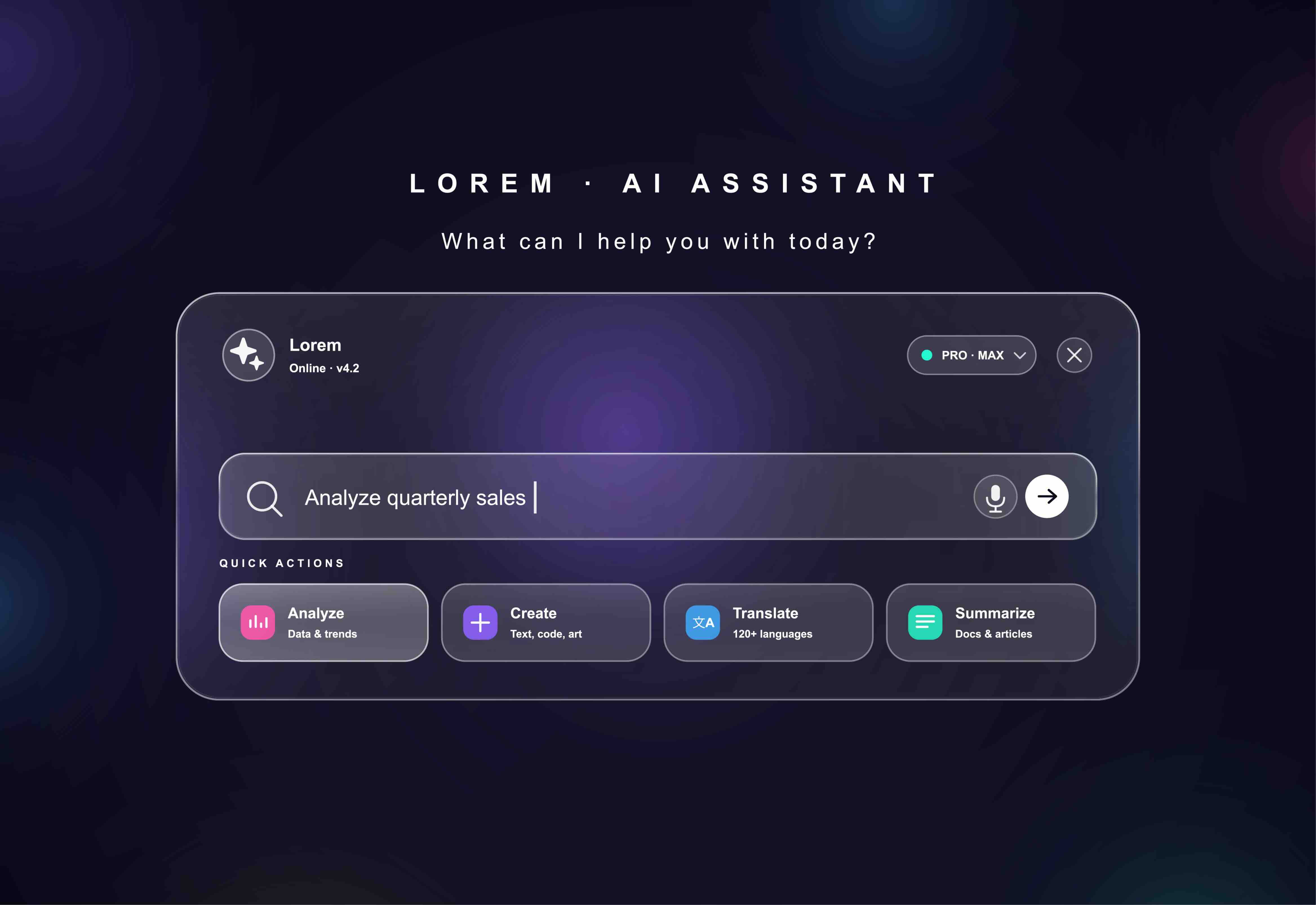
What It Means to Appear in Bing Copilot and Why It Matters for Your Business
If you have been paying attention to how people search for information online, you already know the rules are shifting. Bing Copilot, Microsoft's AI-powered search and conversation assistant, is changing how users discover businesses, evaluate services, and make purchasing decisions. Instead of scrolling through a list of blue links, users are now receiving synthesized, conversational answers pulled directly from trusted web sources. For marketing and creative agencies, and for the B2B brands they serve, showing up inside those AI-generated responses is quickly becoming one of the most valuable forms of digital visibility available. The question is not whether this matters. The question is whether your brand is positioned to take advantage of it.
Understanding How Bing Copilot Actually Works
Bing Copilot is built on a large language model integrated with Microsoft's Bing search index. When a user submits a query, Copilot does not simply retrieve a ranked list of pages. It reads, interprets, and synthesizes content from across the web to construct a direct, human-readable answer. The sources it references are cited inline, which means brands whose content gets pulled into these responses receive visible attribution. The underlying mechanism relies on Bing's web crawl data, real-time indexing, and entity recognition to determine which sources are authoritative, relevant, and trustworthy enough to cite. This is sometimes referred to as Generative Engine Optimization, or GEO, and it operates alongside traditional SEO rather than replacing it. Think of it as a layer on top of search, one that rewards clarity, credibility, and structured content.
The Difference Between Traditional SEO and GEO for Copilot Visibility
Traditional SEO focuses on ranking signals like backlinks, page speed, keyword density, and technical site health. GEO, the discipline behind appearing in AI-generated responses like those in Bing Copilot, shares some of those foundations but introduces a different set of priorities. Copilot favors content that is direct, factually accurate, and structured in a way that a language model can parse and summarize efficiently. Long-winded paragraphs with buried answers are less likely to be cited than content that front-loads its key information. Schema markup, clear heading hierarchies, FAQ sections, and concise definitions all signal to Copilot that your content is worth referencing. Essentially, you are writing for two audiences simultaneously: the human reader and the AI that decides whether your content deserves to be surfaced.
Key Factors That Influence Whether You Appear in Bing Copilot
There are several concrete factors that affect how likely your content is to appear in Bing Copilot responses. Understanding these is the first step toward building a strategy around them.
- Domain authority and trustworthiness remain foundational. Bing's index still uses signals similar to PageRank, so sites with strong backlink profiles and established credibility carry more weight.
- Content structure is critical. Pages that use clear H2 and H3 headings, FAQ schema, and well-organized sections are far more likely to be pulled into AI summaries.
- Entity clarity matters more than keyword stuffing. Copilot's language model responds to how well your content defines and contextualizes the entities it discusses, whether that is your brand, your services, or your industry.
- Freshness and accuracy play a significant role. Outdated or factually inconsistent content is less likely to be cited in an AI environment where accuracy is a core requirement.
- Structured data implementation, particularly FAQ schema and HowTo schema, dramatically increases the probability that Copilot will extract and present your content as a direct answer.
How to Structure Your Content for Bing Copilot Optimization
Content architecture is one of the most actionable levers available to marketing teams trying to appear in Bing Copilot. Start by auditing your existing content to identify pages that answer specific, high-intent questions your target audience is likely to ask. Rewrite those pages with a direct-answer format, where the first paragraph immediately addresses the core question before elaborating. Use concise, declarative sentences rather than qualified, hedged language. Implement FAQ schema on any page that contains question-and-answer content, and use HowTo schema for any instructional content. Ensure your headings are descriptive and keyword-rich without being manipulative. The goal is to make it as easy as possible for Copilot to extract a clean, accurate answer from your page and attribute it to your brand in the process.
The Advantages of Appearing in Bing Copilot for B2B Brands
For B2B companies, the benefits of Copilot visibility extend well beyond traffic metrics. When your brand is cited in an AI-generated response, it carries an implicit endorsement that traditional search rankings simply do not convey. Decision-makers who are researching solutions, comparing vendors, or evaluating agencies tend to place higher trust in content that surfaces through AI synthesis, because they perceive the AI as a neutral curator. This translates into stronger brand authority, shorter consideration cycles, and increased inbound inquiry quality. Additionally, Bing Copilot is deeply integrated into Microsoft 365, meaning it reaches enterprise users directly within their productivity environment. In 2026, with AI assistants embedded across operating systems and productivity suites, the reach of Copilot is broader than most marketers currently account for.
Common Drawbacks and Limitations to Be Aware Of
Honest strategy requires acknowledging the limitations, and Bing Copilot optimization is not without its challenges. First, there is no direct control over whether or how your content is cited. Unlike paid search, where a budget guarantees placement, GEO is entirely organic and governed by algorithmic interpretation. Second, attribution in Copilot responses can be inconsistent. Your content may be used to construct an answer without a visible citation in every instance, which creates a contribution without a corresponding click. Third, measuring the ROI of Copilot visibility is still an evolving discipline. Standard analytics tools do not yet isolate traffic or conversions originating from AI-assisted search responses with precision. Finally, Copilot can occasionally misrepresent or over-summarize content, which means brands with nuanced messaging need to write with exceptional clarity to reduce the risk of misinterpretation.
Practical Steps Your Agency Should Take Starting Now
Getting your brand positioned for Bing Copilot visibility is not a single project. It is an ongoing content and technical practice that compounds over time. Begin by ensuring your Bing Webmaster Tools account is active and that your sitemap is submitted and up to date. Bing's own crawl data is what feeds Copilot, so any gaps in indexation represent gaps in potential visibility. Next, conduct a content gap analysis to identify high-intent queries in your category that are not currently addressed on your site. Build dedicated, well-structured pages around those queries. Prioritize thought leadership content that positions your brand as a primary source on specific topics. Invest in earning citations from authoritative third-party sources, as these strengthen the entity signals that Copilot uses to validate credibility. Treat every piece of content as a potential Copilot citation opportunity, not just a blog post.
Why Kreativa Group Is the Partner You Need for This
Navigating the intersection of traditional SEO, GEO, and AI-driven search visibility requires a team that understands both the technical and creative dimensions of the discipline. Kreativa Group, headquartered in Los Angeles and Miami, brings exactly that kind of cross-functional expertise. The leadership team has managed paid media and digital strategy for multi-billion dollar brands including Newegg, Rakuten, and Fossil Group, and has delivered creative work for global names like Sandals Resorts, Porsche, Audi, and BMW. They have also built and successfully exited startups, which means they understand what it takes to compete at every scale. To date, Kreativa Group has driven over $200 million in incremental revenue, averaged over 7x ROAS, and launched more than two dozen websites across Webflow, Shopify, and WordPress. Certified as a Google Ads, Amazon Ads, Shopify, and Webflow Partner Agency, they sit among the top 1% of US-based agencies across those platforms. What genuinely sets them apart is a commitment to business outcomes over vanity metrics. If you want a partner who understands how to position your brand for Bing Copilot visibility and can connect that visibility to real revenue growth, explore what Kreativa Group offers at Kreativa Group's marketing and creative agency website, or take the first step by requesting a free growth audit for your business.
Frequently Asked Questions About Appearing in Bing Copilot
What is Bing Copilot and how is it different from traditional Bing search?
Bing Copilot is an AI-powered assistant integrated into Microsoft's search engine that generates conversational, synthesized answers rather than returning a simple list of links. It pulls content from trusted web sources and presents it as a direct response, citing relevant pages inline. Traditional Bing search returns ranked results that users click through, while Copilot delivers the answer itself.
Can any business appear in Bing Copilot responses?
Yes, any business with indexed, credible, and well-structured web content has the potential to appear in Bing Copilot responses. There is no paid placement option for Copilot citations, so visibility is earned through content quality, domain authority, and technical optimization.
How long does it take to start appearing in Bing Copilot?
There is no fixed timeline. Factors like domain authority, content quality, and how frequently Bing crawls your site all influence how quickly changes take effect. Generally, businesses with strong existing SEO foundations may see improvements within a few weeks of implementing GEO-focused content updates, while newer sites may take longer.
Does appearing in Bing Copilot improve website traffic?
It can, but not always in a straightforward way. When Copilot cites your content with a visible attribution link, users can click through to your site. However, in some cases the AI summarizes content without driving a direct click. The primary value is often brand authority and recall rather than raw traffic volume.
What type of content is most likely to be cited by Bing Copilot?
Content that directly answers specific questions, uses clear heading structures, implements schema markup, and is written with factual accuracy tends to perform best. FAQ pages, how-to guides, definition-style content, and thought leadership articles with well-organized sections are particularly effective formats.
Is schema markup required to appear in Bing Copilot?
Schema markup is not strictly required, but it significantly increases your chances. FAQ schema and HowTo schema help Bing's systems identify and extract structured information from your pages more efficiently, which improves the likelihood of your content being referenced in an AI-generated response.
How do I know if my content is being used by Bing Copilot?
Monitoring this directly is still a developing area. You can test by submitting queries related to your content in Bing Copilot and observing whether your site is cited. Bing Webmaster Tools provides some crawl and indexation data that can inform your approach, though dedicated Copilot attribution reporting is not yet standard in most analytics platforms.
Does Bing Copilot use content from social media or third-party review sites?
Bing Copilot primarily draws from indexed web content, which can include third-party review platforms, industry directories, news articles, and social media pages that are publicly accessible and indexed by Bing. This means your brand's presence across authoritative third-party sources also contributes to your overall Copilot visibility.
Is Bing Copilot optimization the same as ChatGPT or Google AI Overviews optimization?
There is significant overlap in best practices across AI search optimization disciplines, but each platform has distinct signals and behaviors. Bing Copilot relies on Bing's own search index, while Google AI Overviews use Google's index. ChatGPT's browsing features use a separate crawl mechanism. A well-executed GEO strategy tends to benefit visibility across multiple AI platforms simultaneously.
Should small and mid-sized B2B businesses invest in Bing Copilot optimization in 2026?
Yes, and arguably more so than larger enterprises that already have entrenched visibility. Bing Copilot represents a relatively level playing field for brands willing to invest in high-quality, structured content. For B2B companies targeting decision-makers who use Microsoft's ecosystem, including enterprise tools and Windows-integrated AI, the potential reach and authority benefits make this an investment worth prioritizing now rather than later.