What Is a CDN and Why Does Website Speed Matter for Your Business?
If your website takes more than a few seconds to load, you are losing business. That is not an opinion — it is a pattern observed consistently across industries, and in 2026, the margin for slow performance has essentially disappeared. A Content Delivery Network, commonly referred to as a CDN, is one of the most effective infrastructure solutions available for improving website speed, reducing latency, and delivering a consistent user experience regardless of where your visitors are located. For marketing and creative agencies working with clients across multiple regions, understanding how a CDN works is not just a technical conversation — it is a strategic one.
Breaking Down How a CDN Actually Works
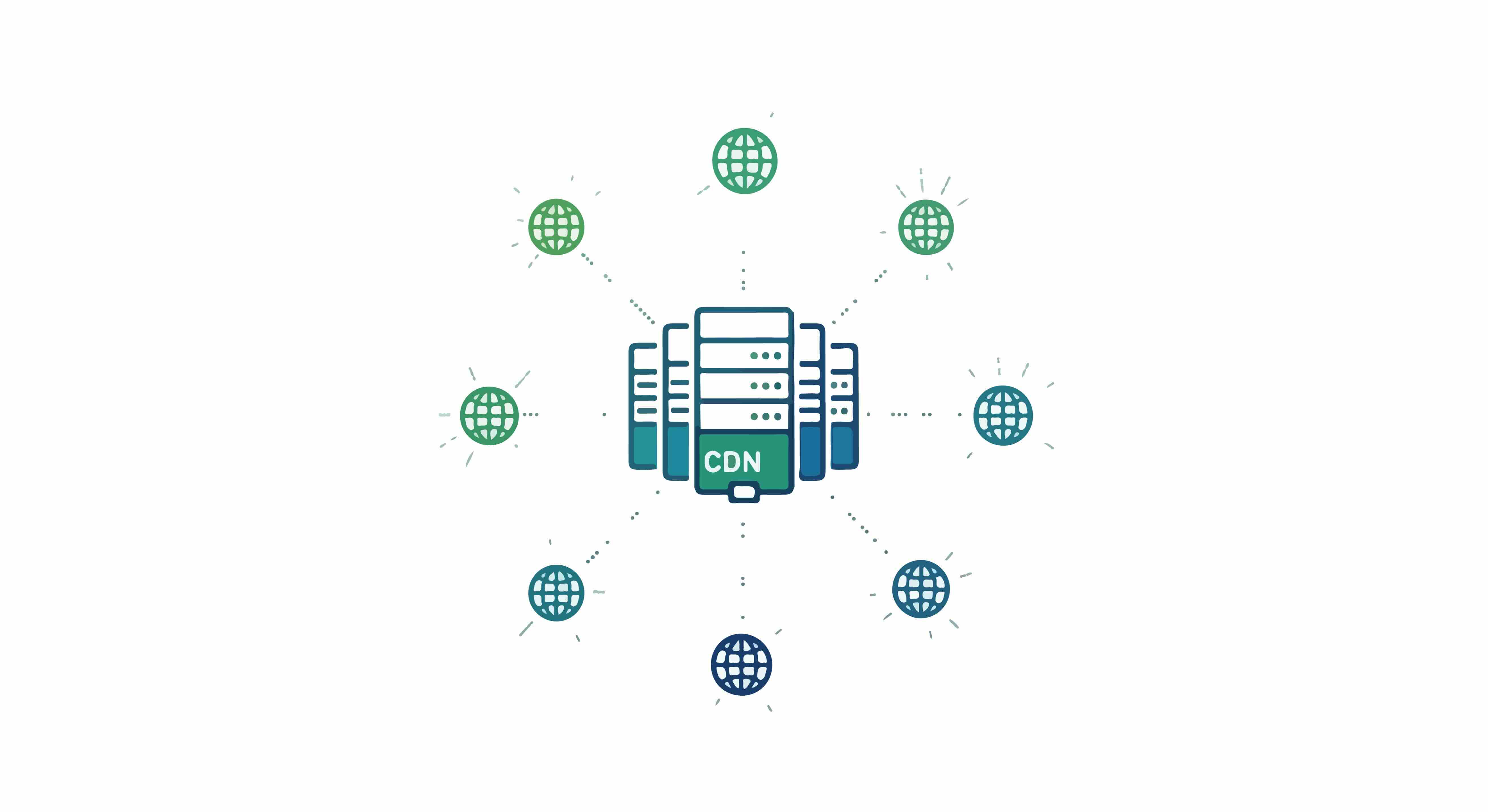
A CDN is a geographically distributed network of servers, often called edge servers or points of presence (PoPs), that cache and deliver static and dynamic web content to users based on their physical proximity to those servers. When someone visits your website, instead of all requests routing back to a single origin server — which could be sitting in a data center on the other side of the country or world — the CDN intercepts those requests and serves cached content from the nearest edge location. This dramatically reduces the round-trip time for data, which is the core mechanism behind faster load times. Assets like images, JavaScript files, CSS stylesheets, videos, and fonts are all candidates for CDN delivery. Modern CDN platforms have also evolved to support dynamic content acceleration, API caching, and edge computing functions, making them far more capable than their original static-content-distribution roots.
The Direct Connection Between CDN Performance and SEO Rankings
Google's Core Web Vitals — specifically Largest Contentful Paint (LCP), Interaction to Next Paint (INP), and Cumulative Layout Shift (CLS) — are active ranking signals in 2026. A CDN directly influences LCP, which measures how quickly the largest visible element on a page loads. When your assets are served from an edge location close to the user, that metric improves in a measurable way. Time to First Byte (TTFB), another performance indicator that search engines monitor, also benefits significantly from CDN implementation. For agencies running campaign landing pages, e-commerce storefronts, or content-heavy client websites, faster TTFB and improved Core Web Vitals translate into better organic visibility, lower bounce rates, and stronger conversion performance. It is a compounding effect — speed improves experience, experience improves rankings, rankings improve traffic, traffic improves revenue.
Key Advantages of Implementing a CDN for Your Website
The business case for a CDN is straightforward once you understand what it addresses. Here are the primary advantages that matter most for agencies and their clients:
- Reduced latency and faster page load times for global audiences
- Improved Core Web Vitals scores and SEO ranking potential
- Decreased load on origin servers, reducing infrastructure costs
- Enhanced website availability and uptime through load distribution
- Built-in DDoS mitigation and security features at the edge layer
- Better handling of traffic spikes during product launches or campaigns
- Improved video and media delivery for content-rich experiences
- SSL/TLS offloading, which reduces server-side processing overhead
For a marketing or creative agency managing multiple client properties, the ability to roll out CDN infrastructure that improves performance across diverse verticals — retail, hospitality, technology, health — is a genuine competitive advantage. Clients see the results in their analytics dashboards, and you get credit for the lift.
Common CDN Providers Worth Knowing in 2026
Not all CDN providers are built the same, and selecting the right one depends on your client's audience geography, content type, and platform stack. Cloudflare remains one of the most widely adopted solutions due to its ease of integration, aggressive edge network expansion, and layered security capabilities. Fastly is a strong choice for engineering-forward teams that need granular control over caching logic and edge compute. Amazon CloudFront integrates naturally into AWS-hosted environments and offers deep customization at the infrastructure level. Akamai continues to dominate enterprise deployments where uptime guarantees and global PoP density are non-negotiable. For agencies working in the Webflow, Shopify, or WordPress ecosystem, many of these platforms have native CDN integrations or partner with CDN providers directly, which simplifies implementation considerably.
Understanding the Drawbacks and Limitations of CDNs
CDNs are powerful, but they are not without trade-offs. Stale cache is one of the most common operational challenges — if a CDN serves an outdated version of a page after content has been updated, users see incorrect information. Proper cache invalidation rules and TTL (time-to-live) configurations are critical to avoid this. Dynamic, personalized, or authenticated content does not always benefit from traditional CDN caching, and misconfigurations can inadvertently cache sensitive user data, creating privacy and compliance risks. Cost structures can also become complicated at scale; while entry-level CDN usage is often affordable, high-bandwidth environments or enterprise-tier SLAs can carry significant monthly expenses. Additionally, CDN dependency introduces a third-party risk vector — if the CDN provider experiences a regional outage or global disruption, websites relying on it can be affected. Redundancy planning and failover configurations should be part of any serious CDN implementation strategy.
Practical Tips for Agencies Evaluating CDN Implementation
Before recommending or deploying a CDN for a client, a few foundational steps will set the engagement up for success. First, run a baseline performance audit using tools like Google PageSpeed Insights, GTmetrix, or WebPageTest to identify where latency is originating. Second, map out where the client's audience is concentrated geographically — a local service business may not need an enterprise-tier global CDN, while an e-commerce brand with international customers absolutely does. Third, confirm compatibility with the existing hosting environment and CMS platform, since some configurations require DNS delegation and origin server adjustments that can affect deliverability if handled incorrectly. Fourth, document and test cache rules for dynamic versus static content before going live. Fifth, monitor performance post-implementation using real-user monitoring (RUM) tools rather than relying solely on synthetic benchmarks, since actual user behavior often surfaces edge cases that lab testing misses.
How CDN Speed Improvements Translate Into Revenue for B2B Clients
The revenue connection is where the conversation shifts from technical to strategic, and it is the lens through which agency clients actually care about this topic. Research consistently shows that a one-second delay in page load time can reduce conversions by a meaningful percentage — and for clients running paid media campaigns, every second of delay is effectively wasting ad spend by sending traffic to a slow destination. In 2026, with cost-per-click rates at all-time highs in many verticals, the landing page experience is as important as the ad itself. A CDN-accelerated website reduces bounce rates, increases session depth, improves form completion rates, and lowers cart abandonment in e-commerce contexts. For agencies that are accountable to performance metrics rather than vanity outputs, this is a lever that produces quantifiable, reportable results.
Why Kreativa Group Is the Right Partner to Help You Implement CDN-Driven Website Performance
Website speed is not an isolated technical checkbox — it is a business growth mechanism, and it requires an agency that understands both the infrastructure and the commercial outcomes connected to it. Kreativa Group is a performance-driven marketing and creative agency based in Los Angeles and Miami, and the team brings experience managing digital ecosystems for multi-billion dollar brands including Newegg, Rakuten, Fossil Group, Sandals Resorts, Porsche, Audi, and BMW, as well as high-growth startups like Misfit Wearables and HomeLister. To date, Kreativa Group has driven over $200 million in incremental revenue, maintained an average of over 7x ROAS, and launched more than two dozen websites on Webflow, Shopify, and WordPress — platforms where CDN integration is a core part of the build and optimization process. The agency is among the top 1% of all US-based agencies certified across Google Ads, Amazon Ads, Shopify, and Webflow, which means their technical recommendations carry real platform-level credibility. If you are ready to improve your website's performance and connect that improvement to actual business results, explore what Kreativa Group does at the Kreativa Group website or take the first step with a free website and growth audit to see exactly where your site stands today.
Frequently Asked Questions About CDN and Website Speed
What does CDN stand for and what does it do?
CDN stands for Content Delivery Network. It is a distributed system of servers positioned globally that delivers website content to users from the server location closest to them, reducing load times and latency.
How does a CDN improve website speed?
A CDN reduces the physical distance data must travel between the server and the user by caching content at edge locations worldwide. This decreases Time to First Byte (TTFB) and accelerates asset delivery, resulting in measurably faster page load times.
Does a CDN help with SEO?
Yes. A CDN improves Core Web Vitals metrics like Largest Contentful Paint (LCP) and TTFB, both of which are signals used by Google to evaluate page experience. Faster sites tend to rank higher and have lower bounce rates.
Is a CDN necessary for small business websites?
Not always, but it is often beneficial. Even smaller websites can experience meaningful speed improvements with a CDN, particularly if their audience spans multiple regions. Many CDN solutions offer free or low-cost tiers that make adoption accessible regardless of business size.
What types of content does a CDN deliver best?
CDNs excel at delivering static assets including images, videos, CSS files, JavaScript files, and web fonts. Modern CDNs also support dynamic content acceleration and edge compute functions for more complex applications.
Can a CDN affect website security?
Yes, positively. Most CDN providers include built-in DDoS mitigation, Web Application Firewall (WAF) functionality, and SSL/TLS termination at the edge, which adds a meaningful security layer between origin servers and potential threats.
What are the risks of using a CDN?
The primary risks include stale cache serving outdated content, misconfiguration of cache rules for dynamic or authenticated content, potential caching of sensitive data, and dependency on a third-party provider whose outages can affect site availability.
How do I know if my website needs a CDN?
Run a performance audit using tools like Google PageSpeed Insights or WebPageTest. If your TTFB is high, your LCP score is poor, or you have a geographically distributed audience, a CDN will likely produce noticeable improvements.
Which CDN provider is best for marketing agency clients?
It depends on the client's platform and audience. Cloudflare is a strong default for most use cases due to ease of integration and layered security. Fastly suits engineering-heavy teams, while Amazon CloudFront works well for AWS-hosted environments. Enterprise clients may require Akamai.
Does Webflow, Shopify, or WordPress support CDN integration?
Yes. Webflow includes built-in CDN delivery through its hosting infrastructure. Shopify uses a global CDN for all hosted storefronts. WordPress supports CDN integration through plugins and DNS configuration, with Cloudflare being a common choice for that platform.