What Does a Website Actually Cost? Here Is What B2B Leaders Need to Know
The question sounds simple enough. How much does a website cost? But anyone who has actually gone through the process of building or rebuilding a business website knows the answer is layered, contextual, and sometimes frustrating to pin down. Costs vary wildly depending on your goals, your platform, your agency, and how much complexity you are bringing to the table. In 2026, with the digital landscape more competitive than ever, investing in a website is not just a line item on a budget. It is a strategic business decision. This article breaks down what goes into website pricing, what you should reasonably expect to pay, and how to make sure every dollar you spend is working toward measurable business outcomes.
The Wide Range of Website Costs and Why They Vary So Much
Website costs can range from a few hundred dollars to several hundred thousand dollars, and both extremes are completely legitimate depending on the context. A small business owner using a templated website builder might spend $500 to $2,000 total. A mid-market B2B company working with a creative agency on a custom Webflow or WordPress build might invest anywhere from $15,000 to $75,000. Enterprise-level builds with custom integrations, API connectivity, multilingual support, and sophisticated UX architecture can push well past $150,000. The key driver behind those numbers is scope, and scope is shaped by your business objectives. What does your website need to do, and for whom? Those two questions will define your budget more accurately than any published price list.
Breaking Down Website Cost by Type of Build
There are essentially three tiers of website development, and understanding each one helps you align expectations with investment. The first is template-based development, which includes DIY platforms like Squarespace or basic Shopify setups. These are cost-effective but often limited in customization, performance optimization, and scalability. The second tier is semi-custom development, where an agency takes a framework or starter theme and builds it out with custom design, copy, and functionality tailored to your brand. This tends to fall in the $10,000 to $40,000 range. The third tier is fully custom development, where every element, from the design system to the component architecture, is built from scratch with your specific user journeys, conversion goals, and brand identity in mind. That level of craft and strategy commands a higher investment because it produces a higher-performing digital asset.
The Hidden Costs of Website Development That Most Agencies Do Not Advertise
Sticker price is one thing. Total cost of ownership is another. Most agencies will quote you for the build itself, but there are recurring and ancillary costs that can catch businesses off guard. Hosting and infrastructure costs vary significantly depending on your platform and traffic volume. Domain registration, SSL certificates, and security monitoring add up annually. Ongoing CMS licensing fees, plugin subscriptions, or platform fees on Shopify or Webflow can range from nominal to meaningful. Then there is content, which is often underestimated. Professional copywriting, photography, video production, and SEO content strategy are frequently scoped separately from the development contract. If you are migrating an existing site, data migration, URL redirect mapping, and technical SEO auditing add further investment. The responsible way to budget for a website is to think in three-year total cost of ownership, not just the launch price.
Key Factors That Drive Website Development Costs Higher
Several variables reliably push website costs upward, and being aware of them helps you prioritize budget allocation intelligently. Custom functionality is one of the biggest cost drivers, whether that means a custom pricing calculator, a client portal, CRM integrations, or ecommerce with complex product configurations. The number of pages and content templates matters too, since each unique layout or section design requires additional design and development time. Multilingual support, accessibility compliance (WCAG 2.2 standards), advanced animation and interaction design, and third-party API integrations all add meaningful hours to a project. Performance optimization for Core Web Vitals, structured data implementation for SEO, and analytics infrastructure setup are non-negotiable for serious businesses but are often underpriced or omitted in lower-tier proposals. Understanding these drivers lets you have a more informed conversation with any agency you evaluate.
What You Get When You Work with a Specialized Creative Agency
There is a meaningful difference between hiring a freelancer, a general development shop, and a specialized creative and marketing agency. A freelancer might execute your design specs competently but rarely brings strategic thinking around conversion rate optimization, brand positioning, or long-term digital growth. A general development shop may be technically proficient but lack the brand sensibility and UX strategy required to make a website perform commercially. A specialized agency brings creative direction, digital strategy, performance thinking, and technical execution under one roof. When an agency has experience designing for global brands, managing large-scale paid media, and launching dozens of websites across platforms like Webflow, Shopify, and WordPress, the value proposition extends well beyond pixel-perfect delivery. You are buying informed judgment, not just execution hours.
The Advantages of Investing in a High-Quality Website Build
A well-built website is one of the most durable commercial assets a business can own. Unlike paid advertising, which stops generating results the moment the budget stops, a high-quality website compounds in value over time through organic search rankings, improved conversion rates, and brand credibility. In 2026, buyers conduct extensive research before engaging a vendor, and your website is often the single most important touchpoint in that evaluation. A site that loads fast, communicates clearly, and guides users through an intentional journey can meaningfully improve lead quality, sales cycle velocity, and customer lifetime value. Conversion rate improvements of even one or two percentage points can translate into significant revenue at scale, which is why website investment should always be evaluated in terms of return, not just cost.
Common Drawbacks and Risks to Understand Before You Start
Website projects go wrong more often than they should, and the reasons tend to be predictable. Unclear scope is the most common culprit. When objectives are not clearly defined upfront, projects expand without proportional budget increases, leading to tension and compromised outcomes. Choosing the wrong platform for your business needs creates technical debt that becomes expensive to resolve later. Underinvesting in content strategy means you can have a beautifully designed site that fails to communicate value or rank in search. Neglecting post-launch maintenance, security updates, and performance monitoring erodes your investment over time. The antidote to all of these risks is a disciplined discovery process at the start of the engagement, where strategy, scope, and success metrics are documented and agreed upon before any design or development work begins.
How to Budget Smartly and Evaluate Agency Proposals
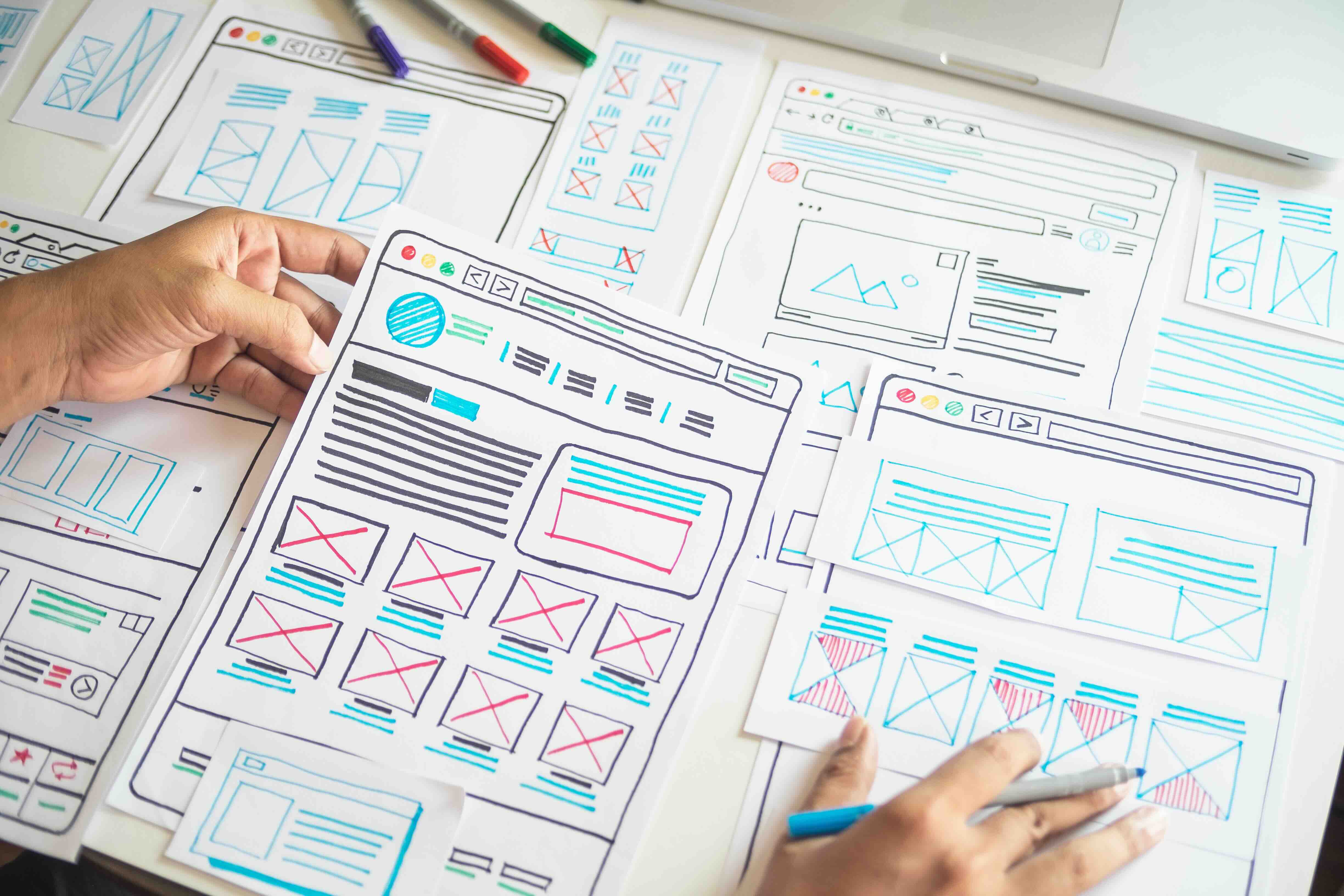
When reviewing proposals from agencies, go beyond the total number and examine what is actually included. Look for clarity around discovery and strategy, wireframing and UX architecture, design revisions, development methodology, QA and testing, launch support, and post-launch maintenance. A lower-priced proposal that omits strategy, skips accessibility compliance, or excludes SEO setup is not a better deal. It is a deferred cost. Ask agencies about their process for aligning on KPIs, how they measure project success, and what happens after launch. A results-oriented agency will be as interested in your conversion goals as they are in the aesthetic quality of the final product. Also ask about platform expertise. Agencies that specialize in Webflow, Shopify, or WordPress bring platform-specific efficiency and best practices that reduce risk and improve output quality.
Why Kreativa Group Is the Right Partner for Your Website Investment
If you are serious about building a website that drives measurable business growth, the agency you choose matters enormously. Kreativa Group is a marketing and creative agency based in Los Angeles and Miami, and its leadership team has an unusually deep track record across both brand-building and performance marketing. They have designed websites and digital assets for global brands including Sandals Resorts, Porsche, Audi, and BMW, and have managed paid media for multi-billion dollar companies like Newegg, Rakuten, and Fossil Group. They have also operated inside fast-moving startups like Misfit Wearables and HomeLister, bringing the same strategic rigor to growth-stage businesses as they do to enterprise clients. To date, Kreativa Group has launched over two dozen websites across Webflow, Shopify, and WordPress, and is among the top 1% of US-based agencies holding certifications across Google Ads, Amazon Ads, Shopify, and Webflow. The agency has driven over $200 million in incremental revenue, averaged more than 7x ROAS, and maintained a 4% average conversion rate across its portfolio. What sets Kreativa Group apart is a singular focus on business outcomes over vanity metrics. If you want a website that performs, not just one that looks good, explore what Kreativa Group delivers for growth-focused businesses or take the first step by requesting a free growth audit to identify where your website may be leaving revenue on the table.
Frequently Asked Questions About Website Costs
How much does a basic business website cost in 2026?
A basic business website built on a template platform typically costs between $500 and $5,000. A professionally designed and developed site with custom strategy, on-brand design, and SEO foundations generally starts at $10,000 and scales depending on complexity and functionality requirements.
What is the most expensive part of building a website?
Custom design and development tend to account for the largest share of website costs, particularly when the project involves complex user flows, unique interactive elements, or bespoke functionality like integrations with CRMs, ERPs, or third-party APIs.
How long does it take to build a professional business website?
A professionally built business website typically takes between six and sixteen weeks from discovery through launch, depending on the scope, number of pages, content readiness, and the complexity of design and development requirements.
Is Webflow more expensive than WordPress for website development?
Not necessarily. Webflow and WordPress have comparable development cost ranges for custom builds. Webflow often reduces long-term maintenance costs because it requires fewer third-party plugins and has a more controlled hosting environment, which can make it more cost-effective over time.
What ongoing costs should I expect after my website launches?
Ongoing website costs typically include hosting fees, platform or plugin subscriptions, domain renewal, security monitoring, content updates, SEO maintenance, and periodic design or functionality updates. Budgeting between $500 and $3,000 per month for a professionally maintained business website is reasonable depending on your platform and needs.
Do I need a custom website or will a template work for my business?
If your business has a clearly differentiated brand, complex service offerings, or specific conversion goals, a custom website will almost always outperform a templated solution in terms of user experience, SEO performance, and commercial results. Templates are appropriate for early-stage businesses testing product-market fit with limited budget.
How do I know if a website agency is worth the investment?
Evaluate an agency by its process, not just its portfolio. Look for evidence of strategic thinking, measurable client outcomes, platform certifications, and a discovery phase that prioritizes your business objectives. Agencies that lead with aesthetics over strategy rarely deliver sites that perform commercially.
Can a new website improve my conversion rate?
Yes, significantly. A website built with intentional UX architecture, clear messaging hierarchy, and conversion rate optimization principles can improve lead generation or ecommerce sales meaningfully. Even a one to two percentage point improvement in conversion rate can generate substantial incremental revenue depending on your traffic volume.
Should website cost be treated as a capital expense or operational expense?
Most businesses treat website development as a capital expenditure since it produces a durable digital asset with a multi-year useful life. Ongoing maintenance and content management are typically treated as operational expenses. Consulting with your finance team on proper accounting treatment is advisable for larger website investments.
What questions should I ask a web agency before signing a contract?
Ask about their discovery and strategy process, how they define and measure project success, what platforms they specialize in, whether SEO and accessibility are included in scope, what the revision process looks like, how launch support is handled, and what post-launch engagement options are available. An agency that cannot answer these questions clearly is a risk to your investment.