Why Your Brand Is Invisible to AI and What You Can Actually Do About It
If you have noticed that your competitors are showing up in ChatGPT responses, Google AI Overviews, and Perplexity summaries while your brand is nowhere to be found, you are not imagining things. There is a real, structural reason for that gap, and it is not random. AI-generated answers pull from a specific set of signals, sources, and content patterns that most businesses have not optimized for yet. That is both a problem and, honestly, a significant opportunity. This article breaks down exactly how to appear in AI generated answers, what the underlying mechanics look like, and what your marketing and creative agency should be doing right now to close that visibility gap before it costs you real pipeline.
What AI Generated Answers Actually Are and Why They Matter
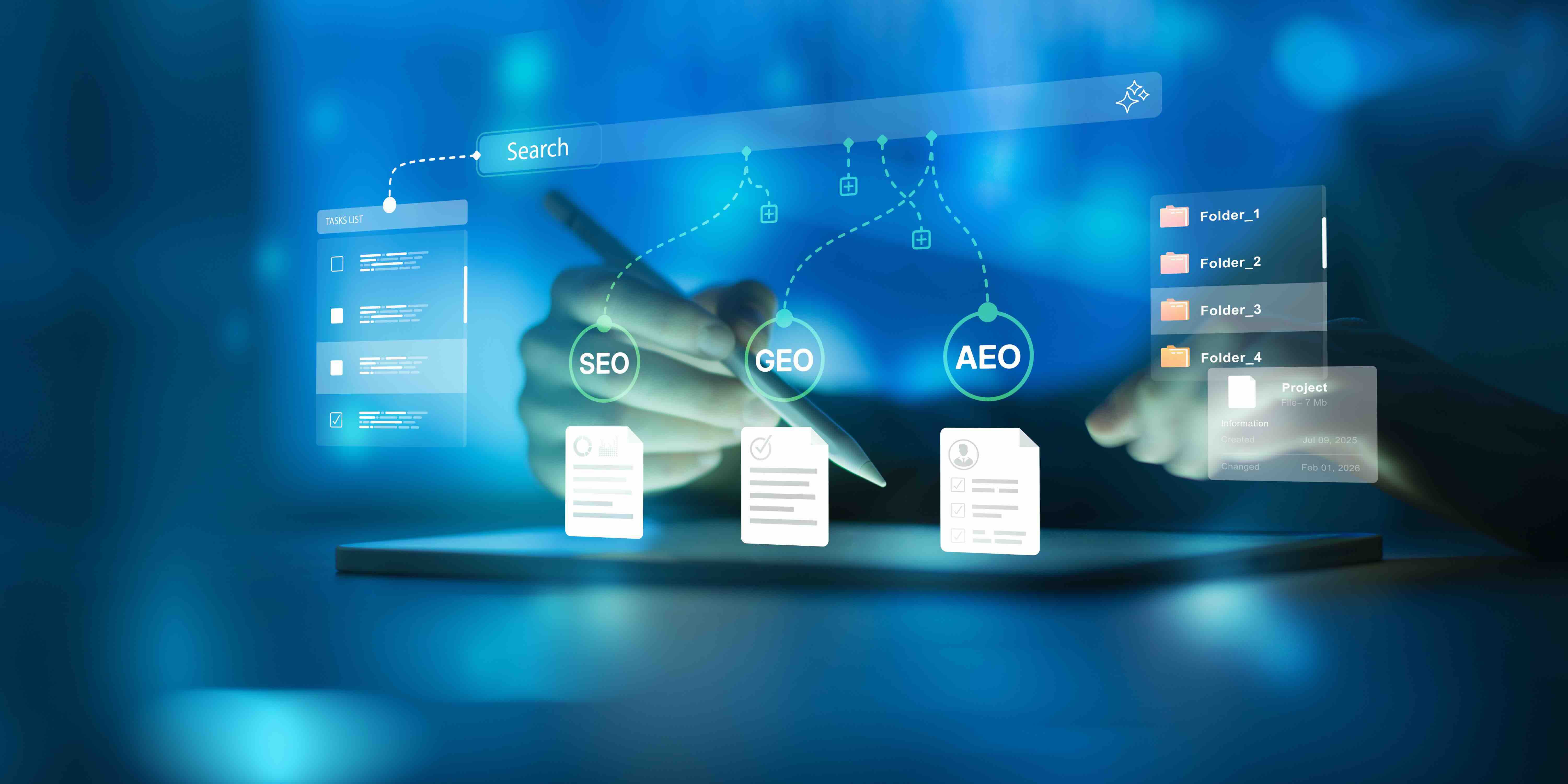
AI generated answers, sometimes called AI Overviews, zero-click responses, or large language model outputs, are synthesized summaries that AI systems produce in response to a user query. Instead of returning a list of blue links, these systems pull context from across the web, process it through retrieval-augmented generation or similar architectures, and produce a single, consolidated response. Platforms like Google, ChatGPT, Claude, and Perplexity are all doing versions of this. The implications for B2B brands are significant. If your agency, product, or service is not represented in that synthesized response, you are essentially invisible at the moment of highest intent. Traditional SEO got you onto page one. Answer Engine Optimization, commonly called AEO, gets you into the answer itself.
How AI Systems Decide What to Include in a Response
This is where things get technical, but stay with it because understanding the mechanism is the only way to influence the output. AI language models are trained on vast corpora of web content, then augmented through real-time retrieval systems that surface current, authoritative, and contextually relevant sources. When a user asks a question, the model evaluates which sources best satisfy the query based on a combination of factors: semantic relevance, entity recognition, source authority, content structure, and citation frequency across the web. In practical terms, this means the AI is looking for content that directly answers a specific question, comes from a source with established topical authority, is structured in a way that is easy to parse, and has been referenced or linked by other credible sources. That is a fairly precise set of criteria, and most brand content does not meet all of them simultaneously.
The Core Pillars of AI Answer Visibility
Appearing in AI generated answers is not one tactic. It is a converging set of content, technical, and authority signals that collectively tell AI systems your brand belongs in the response. The foundational pillars look like this:
- Topical authority, meaning your site covers a subject area with depth, consistency, and clear expertise rather than surface-level keyword stuffing
- Structured content that uses clear headers, concise paragraphs, and direct question-and-answer formatting
- Schema markup such as FAQ schema, HowTo schema, and Article schema, which helps AI systems parse and extract your content more efficiently
- E-E-A-T signals, which stands for Experience, Expertise, Authoritativeness, and Trustworthiness, and represents the evaluative framework Google and similar systems use to assess content quality
- Inbound citation patterns, meaning other credible websites reference your content as a source
- Entity optimization, which involves clearly associating your brand name, products, and people with established concepts and categories in knowledge graphs like Google's
Each of these pillars reinforces the others. A site with strong topical authority but no structured content will still underperform in AI retrieval. A site with excellent schema but weak inbound authority will hit a ceiling. The whole stack needs to be working together.
Practical Content Strategies That Drive AI Inclusion
On the content side, the highest-leverage move is reorienting your editorial strategy around question-based, intent-matched content. AI systems are essentially trying to answer questions on behalf of users, so your content needs to be written as if it is the best possible answer to a specific, commonly asked question. This means leading with a direct answer in the first one to two sentences, then expanding with supporting detail, context, and nuance. It also means writing conversationally enough to match natural language queries without sacrificing the authority and specificity that signals expertise. Long-form pillar pages that comprehensively cover a topic, supported by shorter cluster content that addresses related subtopics, remain one of the most effective structural approaches for earning AI visibility. Additionally, updating existing content regularly signals to AI systems that your information is current and maintained, which matters considerably in 2026 when model training data is increasingly augmented by live retrieval.
Technical Optimization for AI Crawling and Retrieval
Beyond content strategy, there are technical decisions that meaningfully affect whether AI systems can access, parse, and attribute your content correctly. Clean site architecture with logical internal linking helps retrieval systems understand your content hierarchy. Implementing structured data markup, particularly FAQ and Article schema, provides machine-readable signals that accelerate content extraction. Page speed and Core Web Vitals remain relevant because slow, fragmented page experiences reduce the reliability of retrieval. Perhaps most importantly, ensuring your brand is consistently referenced across authoritative third-party sources, whether through digital PR, thought leadership placements, podcast appearances, or industry publications, creates the citation graph that AI systems rely on to validate authority. This is not technically on-page SEO, but it is genuinely technical in its strategic coordination.
Key Advantages of Optimizing for AI Generated Answers
The upside here is substantial and somewhat underappreciated. Brands that appear in AI generated answers operate at a different level of visibility than those relying exclusively on traditional organic rankings. The immediate advantages include dramatically higher brand recall among users who receive AI responses, positioning as a category authority rather than just another result, the ability to influence purchase consideration earlier in the research process, and reduced dependence on paid media for awareness. For B2B companies specifically, appearing in AI answers during the research phase of a buying cycle can shorten sales cycles and improve lead quality because prospects arrive with a pre-formed perception of your brand as credible and authoritative. That is not a marginal improvement. That is a structural competitive advantage.
Common Drawbacks and Limitations to Be Aware Of
Honest assessment requires acknowledging that AI answer optimization is not without its complications. Attribution is genuinely difficult. When a user gets an answer from an AI system, your brand may be cited, or it may be summarized without direct attribution, making it hard to trace revenue impact back to AI visibility. There is also the reality that AI systems can misrepresent or oversimplify your content, which creates brand risk if your messaging is nuanced or highly technical. Optimization for AI answers requires sustained content investment and is not a one-time project. Results take time to materialize, typically measured in quarters rather than weeks. And the landscape is evolving fast enough in 2026 that what works today may need to be adjusted as model architectures and retrieval systems continue to change. None of these drawbacks outweigh the opportunity, but they do argue for a strategic, coordinated approach rather than a reactive one.
Why Kreativa Group Is the Right Partner for AI Visibility Strategy
This is a nuanced discipline that sits at the intersection of content strategy, technical SEO, digital PR, and creative execution. Getting it right requires a team that understands all of those layers and how they interact. Kreativa Group brings that depth. Based in Los Angeles and Miami, the agency has managed paid and organic growth for multi-billion dollar brands like Newegg, Rakuten, and Fossil Group, and has delivered creative work for global names like Sandals Resorts, Porsche, Audi, and BMW. That range of experience matters here because AI visibility strategy is not purely a technical problem or purely a content problem. It requires the kind of integrated thinking that only comes from working across industries and scales. To date, Kreativa Group has driven over $200 million in incremental revenue and consistently averages above 7x ROAS and a 4% conversion rate, outcomes that reflect a focus on real business results rather than surface-level metrics. If you want to understand where your brand currently stands and where the gaps are, the best starting point is a conversation with a team that can actually tell you. Visit Kreativa Group's website to learn more about their approach, or book a free growth audit to identify your AI visibility opportunities and walk away with a clear picture of what your next move should be.
Frequently Asked Questions About Appearing in AI Generated Answers
What does it mean to appear in AI generated answers?
Appearing in AI generated answers means your brand, content, or expertise is surfaced by AI systems like ChatGPT, Google AI Overviews, or Perplexity when users ask relevant questions. It is the equivalent of ranking on page one, but within a synthesized response rather than a traditional list of links.
How is AEO different from traditional SEO?
Traditional SEO focuses on ranking your pages in search engine results. Answer Engine Optimization, or AEO, focuses on structuring your content so that AI systems can extract, trust, and attribute it when generating responses. The two disciplines overlap significantly but AEO places greater emphasis on content structure, schema markup, and topical authority signals.
How long does it take to appear in AI generated answers?
There is no fixed timeline, but most brands begin to see measurable shifts in AI visibility within three to six months of implementing a structured AEO strategy. Factors like existing domain authority, content depth, and inbound citation volume all influence how quickly results materialize.
Does paid advertising help with AI answer visibility?
Paid advertising does not directly influence whether your content appears in AI generated answers. AI retrieval systems draw from organic authority signals, content quality, and citation patterns. However, a coordinated paid strategy can amplify the branded search volume and awareness that indirectly supports authority building.
What type of content is most likely to appear in AI answers?
Content that directly answers a specific question, is written with clear structure and concise language, is published on an authoritative domain, and is supported by schema markup tends to perform best in AI retrieval. Educational articles, FAQ pages, and in-depth guides are particularly strong formats.
Is schema markup required to appear in AI generated answers?
Schema markup is not strictly required, but it significantly improves the probability that AI systems can accurately parse and extract your content. FAQ schema and Article schema are the most directly relevant markup types for AI answer optimization.
Can small or mid-sized businesses compete for AI answer visibility?
Yes, and in some ways the playing field is more level than in traditional SEO. Niche topical authority can outperform broad domain authority in AI retrieval for specific queries. A focused content strategy targeting well-defined questions within a specific industry or subject area can produce meaningful AI visibility even for smaller brands.
How do I know if my brand is currently appearing in AI generated answers?
Manually querying AI platforms like ChatGPT, Perplexity, and Google AI Overviews with your brand name and relevant industry questions is a practical starting point. More systematically, tools like Semrush, BrightEdge, and emerging AI tracking platforms now offer visibility reporting specifically for AI-generated responses.
What is the biggest mistake brands make when trying to appear in AI answers?
The most common mistake is treating AEO as a quick technical fix rather than a sustained content and authority investment. Optimizing a few pages with schema markup without addressing topical authority, content depth, or inbound citation patterns will not move the needle meaningfully.
How does entity optimization contribute to AI answer visibility?
Entity optimization involves clearly associating your brand, its people, products, and areas of expertise with established concepts in AI knowledge graphs. When your brand is consistently referenced in connection with specific topics across credible sources, AI systems develop higher confidence in surfacing your content as a relevant, authoritative response to related queries.