LinkedIn Ads Benchmarks 2026: What B2B Marketers Need to Know Right Now
If you are running LinkedIn ads in 2026 and you have no idea what good performance actually looks like, you are essentially navigating without a map. That is not a criticism, it is just reality. LinkedIn has matured considerably as an advertising platform, and the standards marketers are held to have evolved right along with it. Understanding LinkedIn ads benchmarks in 2026 is not just a nice-to-have for marketing agencies and B2B brands, it is the baseline for making intelligent budget decisions, setting realistic expectations with clients, and identifying where campaigns are leaking revenue. This article breaks down what the benchmarks actually are, how to interpret them, and what you can do when your numbers are off.
What Are LinkedIn Ads Benchmarks and Why Do They Matter in 2026
LinkedIn ads benchmarks are aggregated performance standards that reflect average results across advertisers using the platform. They typically cover metrics like click-through rate, cost-per-click, cost-per-lead, conversion rate, and engagement rate. Think of them as a performance compass rather than a finish line. In 2026, these benchmarks have shifted from where they were even two years ago, largely due to platform algorithm updates, increased advertiser competition, and the growing sophistication of LinkedIn's Campaign Manager targeting capabilities. For marketing and creative agencies specifically, these numbers serve as the foundation for client reporting, creative strategy, and media planning. Without them, you are just guessing, and guessing is expensive.
The Core LinkedIn Ads Benchmarks You Should Be Tracking in 2026
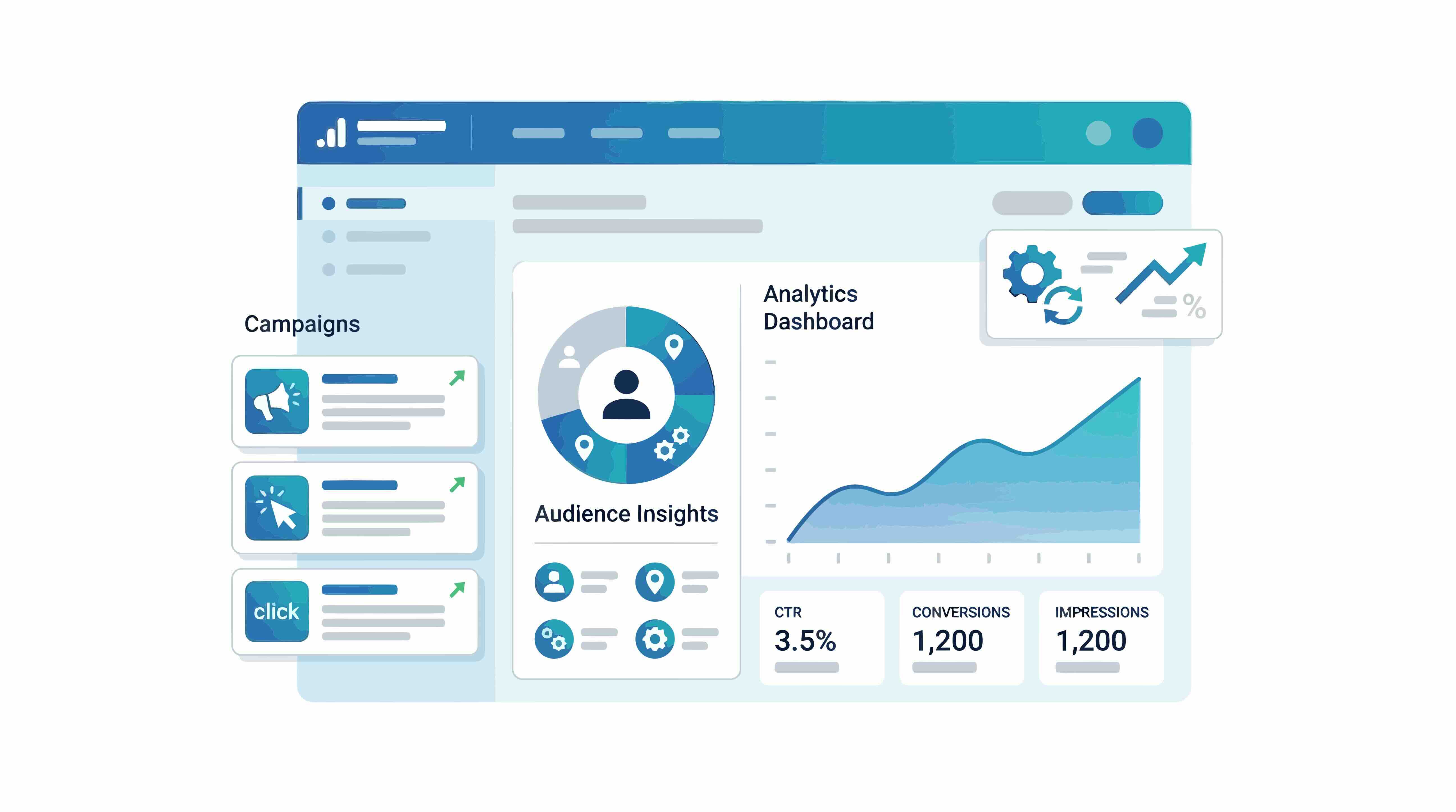
Let's get specific. Based on aggregated data and industry reporting for 2026, here are the LinkedIn ads benchmarks that matter most for B2B advertisers and agencies operating in competitive verticals. These figures are directional averages and will vary by industry, ad format, and audience segment.
- Average Click-Through Rate (CTR): 0.44% to 0.65% across all ad formats
- Sponsored Content CTR: 0.50% to 0.70%
- Message Ads open rate: 30% to 40%
- Cost-Per-Click (CPC): $5.00 to $12.00 depending on audience targeting and vertical
- Cost-Per-Lead (CPL): $60 to $200 for lead gen form campaigns
- Conversion Rate (CVR): 2.0% to 5.5% for well-optimized landing pages
- Engagement Rate: 0.5% to 1.5% for Thought Leadership and Document Ads
These ranges are wide because LinkedIn performance is highly contextual. A cybersecurity firm targeting CISOs at enterprise accounts will see very different CPCs than a creative agency targeting marketing directors at mid-market companies. The key is not chasing the average, it is understanding where you sit relative to it and building a strategy accordingly.
How LinkedIn Ad Formats Affect Benchmark Performance
Not all LinkedIn ad formats are created equal, and in 2026, format selection has become one of the most consequential decisions a media buyer can make. Single Image Ads remain the workhorse of most B2B campaigns, offering predictable reach and relatively stable CPCs. However, Video Ads have continued to gain traction, particularly for awareness-stage campaigns targeting decision-makers who consume content during commute windows or between meetings. Video completion rates on LinkedIn hover around 12% to 25% when creative is genuinely compelling, which is meaningful in a feed full of generic thought leadership posts. Conversation Ads and Document Ads have emerged as high-engagement formats in 2026, with Document Ads in particular driving above-average dwell time. Lead Gen Forms still deliver some of the highest CPL efficiency on the platform because they reduce friction in the conversion path. If you are not testing across formats, you are likely leaving performance on the table.
Key Advantages of Using LinkedIn Ads for B2B Marketing
LinkedIn is not the cheapest advertising channel. Anyone who tells you otherwise has probably not looked at their invoices recently. But cost-per-click is only one dimension of value, and for B2B brands in particular, LinkedIn delivers something most platforms cannot, which is precision access to professional intent. You can target by job title, seniority level, company size, industry, and even specific company names using Account-Based Marketing strategies. That level of targeting granularity is genuinely powerful when your ideal customer profile is narrow. In 2026, LinkedIn's predictive audience tools and Matched Audiences features have also improved substantially, allowing advertisers to layer first-party CRM data with platform behavioral signals. For agencies running campaigns on behalf of B2B clients, this translates into shorter sales cycles, higher-quality pipeline, and better alignment between marketing and sales teams. The platform also offers robust LinkedIn Insight Tag capabilities for conversion tracking and remarketing, which feeds more accurate data back into campaign optimization.
Common Drawbacks and Limitations to Keep in Mind
LinkedIn ads are not without friction. The cost structure remains one of the most common points of frustration for advertisers. CPCs that range from $5 to $12 and CPLs that can exceed $150 are difficult to justify without a clear understanding of customer lifetime value and a properly built attribution model. Budget minimums and the platform's auction dynamics mean that smaller advertisers with limited spend often struggle to generate statistically significant data quickly enough to optimize effectively. Creative fatigue is also a persistent challenge on LinkedIn. Because the platform's user base is smaller and more defined than Facebook or Google, your audience sees your ads more frequently, which drives up frequency scores and drives down CTR over time. Refreshing creative assets every four to six weeks is not optional at this point, it is a requirement. Additionally, LinkedIn's reporting interface, while improved in 2026, still lags behind Google Ads and Meta in terms of granularity and real-time data accessibility.
How to Use LinkedIn Benchmarks to Improve Campaign Performance
Benchmarks only add value when you do something with them. The most practical application is a structured performance audit. Start by pulling your campaign-level data and comparing CTR, CPC, CPL, and CVR against the 2026 benchmarks for your vertical. If your CTR is sitting below 0.40%, your creative is likely the problem. If your CPL is above $200, your targeting or landing page experience needs attention. If your CVR is under 2%, the disconnect is usually in the post-click experience, which means your landing page, offer clarity, or form design is creating unnecessary drop-off. From there, it is about hypothesis-driven testing. A/B testing ad copy, rotating creative formats, adjusting bid strategies between Maximum Delivery and Cost Cap, and refining audience segmentation all contribute to incremental performance gains over time. The benchmarks give you the starting point. Consistent, methodical optimization is what moves the needle.
Industry-Specific Considerations for Marketing and Creative Agencies
Marketing and creative agencies occupy an interesting position in the LinkedIn ads ecosystem. You are simultaneously a potential advertiser promoting your own services and a practitioner managing campaigns on behalf of clients across multiple verticals. In both contexts, knowing the 2026 LinkedIn ads benchmarks by industry is critical. Technology and SaaS companies typically see CPLs on the higher end of the scale, often between $90 and $200, because competition for senior buyer attention is intense. Professional services firms tend to see moderate CPCs but longer conversion windows due to complex buying committees. For agencies, the practical implication is that benchmark expectations should be calibrated to the client's vertical from day one, not retrofitted after the first month of disappointing results. Client education is part of the job, and benchmarks are one of the most effective tools for that conversation.
Practical Tips for Hitting LinkedIn Benchmark Targets in 2026
Getting your campaigns into benchmark range or above it requires attention across multiple variables simultaneously. Here are the most actionable levers agencies and advertisers should be pulling in 2026.
- Lead with value-first creative that addresses a specific pain point rather than promoting a product or service directly
- Use LinkedIn Lead Gen Forms over external landing pages when CPL efficiency is the primary goal
- Implement frequency caps to prevent creative fatigue from eroding CTR over time
- Layer Matched Audiences with job title and seniority targeting for tighter audience precision
- Run retargeting campaigns targeting website visitors and video viewers to improve conversion rates
- Test Thought Leadership Ads if you have credible executive voices, as they consistently outperform standard brand content
- Align ad messaging with buyer stage to avoid serving bottom-funnel offers to cold audiences
- Monitor your Quality Score equivalent in LinkedIn through relevance indicators and adjust creative or targeting accordingly
Why Kreativa Group Is the Right Partner for Your LinkedIn Ads Strategy
Knowing the benchmarks is one thing. Building campaigns that consistently meet or exceed them is another challenge entirely. Kreativa Group is a performance-driven marketing and creative agency based in Los Angeles and Miami, and this is exactly the kind of work we live in. Our leadership team has managed paid media at scale for multi-billion dollar brands including Newegg, Rakuten, and Fossil Group, and has delivered creative for global names like Sandals Resorts, Porsche, Audi, and BMW. We have also helped startups scale and exit, including Misfit Wearables and HomeLister, which means we understand how to build efficient paid media systems under both enterprise budgets and lean startup constraints. To date, Kreativa Group has driven more than $200 million in incremental revenue, averaged over 7x ROAS, and maintained a 4% average conversion rate across campaigns. We are certified Google Ads, Amazon Ads, Shopify, and Webflow partners, placing us among the top 1% of US-based agencies across all four certifications. If you want to understand how your LinkedIn ads are performing against 2026 benchmarks and what it would take to improve them, visit Kreativa Group's homepage or book a free growth audit with our team to get a clear picture of where your campaigns stand and where they should be going.
Frequently Asked Questions About LinkedIn Ads Benchmarks 2026
What is a good click-through rate for LinkedIn ads in 2026?
A good CTR for LinkedIn ads in 2026 falls between 0.50% and 0.70% for Sponsored Content. Anything above 0.70% is considered strong performance and typically signals that your creative and targeting are well-aligned with your audience's interests.
What is the average cost-per-click on LinkedIn in 2026?
The average CPC on LinkedIn in 2026 ranges from $5.00 to $12.00 depending on your target audience, industry vertical, and bid strategy. Highly competitive audiences such as C-suite executives at enterprise companies tend to push CPC toward the upper end of that range.
What is the average cost-per-lead on LinkedIn in 2026?
For Lead Gen Form campaigns, the average CPL on LinkedIn in 2026 sits between $60 and $200. Performance varies significantly by industry, offer type, and how well the targeting is refined to match the intended buyer persona.
How does LinkedIn's performance compare to other B2B ad platforms in 2026?
LinkedIn generally delivers higher CPCs than Google Display or Meta, but the trade-off is superior audience precision for B2B targeting. For campaigns where reaching specific job titles, industries, or company sizes is critical, LinkedIn typically produces higher-quality leads even at a higher cost-per-lead.
Which LinkedIn ad format performs best in 2026?
There is no single best format, as performance depends on campaign objective and funnel stage. Lead Gen Forms and Document Ads tend to perform well for mid-funnel lead capture, while Video Ads and Thought Leadership Ads are effective for top-of-funnel awareness and engagement.
How often should I refresh LinkedIn ad creative in 2026?
Creative should be refreshed every four to six weeks at minimum to combat audience fatigue. LinkedIn's smaller user base means frequency builds faster than on platforms like Meta, which directly impacts CTR and overall campaign efficiency.
What conversion rate should I expect from LinkedIn ads in 2026?
Well-optimized LinkedIn ad campaigns should achieve a conversion rate between 2.0% and 5.5%. Lower conversion rates often point to issues with the post-click experience, including landing page relevance, page load speed, or form complexity.
Is LinkedIn advertising worth the cost for small and mid-sized agencies?
LinkedIn can be worth the investment for smaller agencies if the target audience is clearly defined and the customer lifetime value justifies the CPL. The key is starting with tightly focused targeting, a compelling lead magnet or offer, and a minimum monthly budget that allows enough data to optimize effectively.
How do I know if my LinkedIn ads are underperforming against 2026 benchmarks?
Compare your campaign-level CTR, CPC, CPL, and CVR against the 2026 benchmark ranges for your industry. If two or more of your core metrics fall below the benchmark average, your campaign likely needs creative, targeting, or landing page optimization before scaling spend.
What role does audience segmentation play in LinkedIn ads performance in 2026?
Audience segmentation is one of the highest-leverage variables in LinkedIn ads performance. Layering job function, seniority, industry, and company size targeting with Matched Audiences and retargeting segments allows advertisers to serve more relevant messages to more qualified prospects, which directly improves CTR, CPL, and conversion rate.