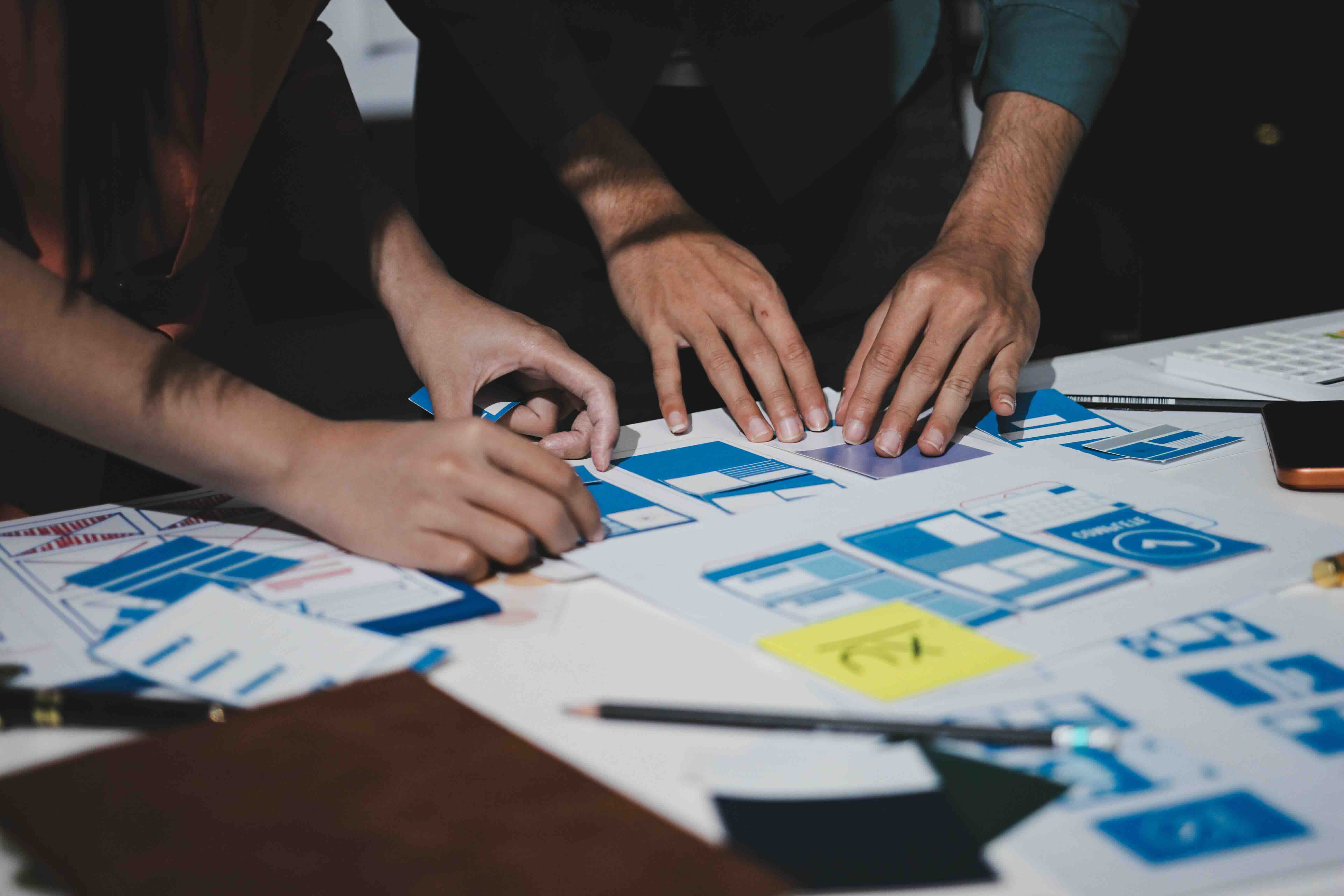
What Is UX Design and Why Does It Matter for Your Business?
User experience design, commonly referred to as UX design, is the practice of shaping how people interact with a product, platform, or digital environment. It goes well beyond aesthetics. While visual design asks what something looks like, UX design asks how something works, how it feels, and whether it actually solves a real problem for the person using it. In a business context, especially in the B2B space, this distinction carries enormous weight. A beautifully branded website that confuses visitors is not doing its job. A product with powerful features that no one can figure out how to use will struggle to retain customers. UX design is the connective tissue between your business intentions and your customer's actual experience, and when it is done well, the results show up directly in your bottom line.
How UX Design Actually Works in Practice
A lot of people assume UX design is something that happens toward the end of a project, almost like a final polish. That is a common and costly misconception. Effective UX design is a research-driven process that begins before a single wireframe is drawn. It starts with understanding users through interviews, surveys, behavioral analytics, and usability testing. From there, designers develop user personas and journey maps that illustrate how different types of customers move through an experience, where they encounter friction, and what motivates them to take action. Information architecture is then established, defining the structural logic of a product or website. Wireframes and low-fidelity prototypes follow, allowing teams to test assumptions quickly without investing in high-cost development. After iteration and validation, high-fidelity designs and interactive prototypes are produced and handed off to development. The process is cyclical, not linear. Continuous feedback loops are baked into the methodology because user needs evolve, and a well-structured UX practice evolves with them.
The Core Components of a Strong UX Strategy
There are several foundational pillars that any credible UX design agency will work within. Understanding these components helps business leaders ask better questions and make more informed decisions when evaluating agency partners or internal capabilities. The key components include the following:
- User Research and Discovery
- Persona Development and Journey Mapping
- Information Architecture and Content Strategy
- Wireframing and Prototyping
- Usability Testing and Iterative Design
Accessibility and Inclusive Design Standards
Handoff Documentation and Developer Collaboration
Each of these components serves a specific purpose within the overall design system. User research, for instance, removes guesswork from decision-making. Accessibility standards ensure compliance with WCAG guidelines, which is both an ethical responsibility and increasingly a legal one. The handoff process determines how cleanly the design vision is translated into the final built product. Missing any one of these elements introduces risk into the experience, and risk in UX almost always translates into user drop-off, reduced conversions, or increased support costs.
Key Advantages of Investing in UX Design
The return on investing in UX design is well-documented across the industry. Businesses that prioritize UX see measurable improvements across several performance indicators, from customer acquisition to retention to overall satisfaction scores. At a high level, strong UX design reduces cognitive load for users, meaning people can accomplish their goals faster and with less frustration. This directly impacts conversion rates, time-on-site, and churn rates. For B2B companies specifically, where purchase decisions involve multiple stakeholders and longer sales cycles, a clear and intuitive digital experience can meaningfully accelerate the path to conversion. There is also a compounding benefit to consider. Great UX reduces pressure on customer support teams because users encounter fewer dead ends. It improves onboarding efficiency for SaaS products and internal tools. And it signals to prospective clients and partners that your organization operates with intention and professionalism, which carries real brand equity in competitive markets.
Common Drawbacks and Challenges to Be Aware Of
UX design is not without its complications, and being honest about that is important. One of the most frequent challenges businesses face is treating UX as a one-time deliverable rather than an ongoing discipline. A UX audit or redesign project may yield strong initial results, but without a commitment to continuous testing and iteration, the experience will gradually drift out of alignment with user needs and market expectations. Another common issue is the disconnect between UX designers and development teams. When handoff documentation is incomplete or stakeholder alignment is poor, the built product can diverge significantly from the intended design, undermining the entire effort. Budget constraints also create tension. Comprehensive UX research takes time, and businesses under pressure to ship quickly sometimes cut corners on discovery and testing phases, which almost always leads to more expensive fixes down the road. Finally, measuring the impact of UX improvements can be tricky. Without proper baseline metrics and attribution frameworks in place, it is difficult to isolate the contribution of UX changes from other variables, making it harder to justify continued investment internally.
UX Design Versus UI Design: Clearing Up the Confusion
This distinction comes up constantly and it is worth addressing directly. UI design, or user interface design, refers specifically to the visual and interactive elements of a product: buttons, typography, color systems, iconography, spacing, and so on. UX design is the broader strategic and experiential layer that determines how those elements should be organized and why. In practice, many designers work across both disciplines, and the two are closely intertwined. But conflating them leads to misaligned expectations. A business that hires for UI alone and skips the UX layer will end up with a visually polished product that may still fail to convert or retain users, because the underlying logic of the experience was never interrogated. When evaluating a UX design agency, it is worth asking specifically how they approach the research and strategy phases, not just what the final deliverables look like.
Practical Tips for Businesses Evaluating UX Design Agencies
Choosing the right UX design partner is a significant decision, and there are a few things worth keeping in mind as you evaluate your options. The process does not need to be overwhelming, but it does require asking the right questions.
Ask to see case studies that demonstrate measurable business outcomes, not just visual portfolios
Confirm that the agency conducts user research as a standard part of their process
Understand how they handle stakeholder alignment and cross-functional collaboration
Ask specifically about their usability testing methodology and how feedback loops are structured
Clarify ownership of deliverables, including design files and documentation
Discuss how they approach accessibility compliance and inclusive design
Understand their handoff process and how they work with development teams or yours
It is also worth evaluating cultural fit. UX design involves a significant amount of collaboration, feedback, and iteration. A partner that communicates clearly, respects timelines, and aligns with your organization's way of working will deliver better results than one that simply has a strong portfolio but a friction-filled process.
How UX Design Connects to Broader Marketing and Growth Goals
In 2026, the most effective marketing and creative agencies understand that UX design does not exist in a vacuum. It is deeply connected to SEO performance, conversion rate optimization, paid media efficiency, and brand perception. A well-structured user experience improves on-page engagement metrics that influence organic search rankings. It reduces the cost per acquisition from paid channels by improving post-click landing page performance. And it reinforces brand credibility at every touchpoint in the customer journey. For businesses operating in competitive markets, the compounding effect of aligning UX design with broader growth strategy is one of the highest-leverage investments available. Agencies that treat UX as an integrated discipline rather than a siloed service tend to produce significantly stronger outcomes for their clients.
Why Kreativa Group Is the UX Design Partner Built for Business Growth
If you are looking for a UX design agency that operates with the sophistication of a global agency and the agility of a growth-focused team, Kreativa Group is worth a serious look. Based in Los Angeles and Miami, Kreativa Group brings a leadership team with hands-on experience designing digital products and experiences for brands like Porsche, Audi, BMW, Sandals Resorts, and global ad agencies including Young and Rubicam. They have also built and scaled digital experiences for startups like Misfit Wearables and HomeLister, navigating the speed and resource constraints that growth-stage companies face. To date, the team has launched over two dozen websites across Webflow, Shopify, and WordPress, driven more than $200 million in incremental revenue, and maintained an average 4% conversion rate across their portfolio. That last number is especially relevant when evaluating UX impact. They are also among the top 1% of US-based agencies certified across Google Ads, Amazon Ads, Shopify, and Webflow, which means the UX work they produce is grounded in a clear understanding of how design decisions affect performance at every stage of the funnel. Kreativa Group focuses on business outcomes, not vanity metrics, which is the right frame for any serious UX investment. You can explore more about their work and philosophy at Kreativa Group's marketing and creative agency website, or take the first step toward improving your digital experience by booking a free growth audit with Kreativa Group to identify exactly where your current experience is leaving revenue on the table.
Frequently Asked Questions About UX Design
What does a UX design agency actually do?
A UX design agency conducts user research, develops personas and journey maps, creates wireframes and prototypes, tests usability with real users, and produces final design deliverables that guide development. The goal is to create digital experiences that are intuitive, efficient, and aligned with both user needs and business objectives.
How is UX design different from web design?
Web design typically focuses on the visual presentation of a website, including layout, color, and typography. UX design is a broader discipline that encompasses the strategic and behavioral logic behind how a digital experience is structured, how users navigate it, and how effectively it helps them accomplish their goals.
How long does a UX design project typically take?
Project timelines vary based on scope and complexity. A focused UX audit might take two to four weeks, while a full UX redesign for a complex product or website could take three to six months or more, depending on the depth of research, number of stakeholders involved, and iteration cycles required.
What is the ROI of investing in UX design?
Research consistently shows that UX investment delivers strong returns through higher conversion rates, lower customer support costs, reduced development rework, and improved user retention. The specific ROI depends on the current state of your experience and the scope of improvements made, which is why baseline measurement before a project begins is important.
How do I know if my business needs a UX redesign?
Common indicators include high bounce rates, low conversion rates, frequent user complaints about navigation or usability, poor onboarding completion rates, and declining engagement metrics. A UX audit can help identify specific friction points and prioritize improvements based on business impact.
What is the difference between UX design and CRO?
Conversion rate optimization focuses specifically on improving the percentage of users who complete a desired action, often through A/B testing and data analysis. UX design takes a broader view, addressing the overall quality and coherence of the user experience. The two disciplines are complementary and most effective when practiced together.
Should I hire an in-house UX designer or work with an agency?
For businesses with ongoing product development needs, an in-house designer may make sense over time. For companies needing strategic UX work, a redesign, or a specialized skill set without the overhead of a full-time hire, a UX design agency typically offers greater depth of expertise, faster ramp time, and broader tooling.
What deliverables should I expect from a UX design project?
Standard deliverables include user research reports, personas, journey maps, site maps or information architecture documentation, wireframes, interactive prototypes, usability testing summaries, and final high-fidelity design files. Handoff documentation for development teams is also an important and often undervalued deliverable.
How does UX design affect SEO performance?
UX design directly influences several SEO ranking factors, including page engagement metrics like time on site and bounce rate, Core Web Vitals scores related to page speed and interactivity, and the logical structure of content through information architecture. A well-designed user experience tends to improve organic search performance over time.
How do I evaluate the quality of a UX design agency?
Look for agencies that lead with research and strategy, not just visual output. Ask to see case studies tied to measurable outcomes. Evaluate their process for usability testing and iteration. Confirm they have experience in your industry or with similar product types. Strong communication practices and transparent project management are also reliable indicators of a quality partner.