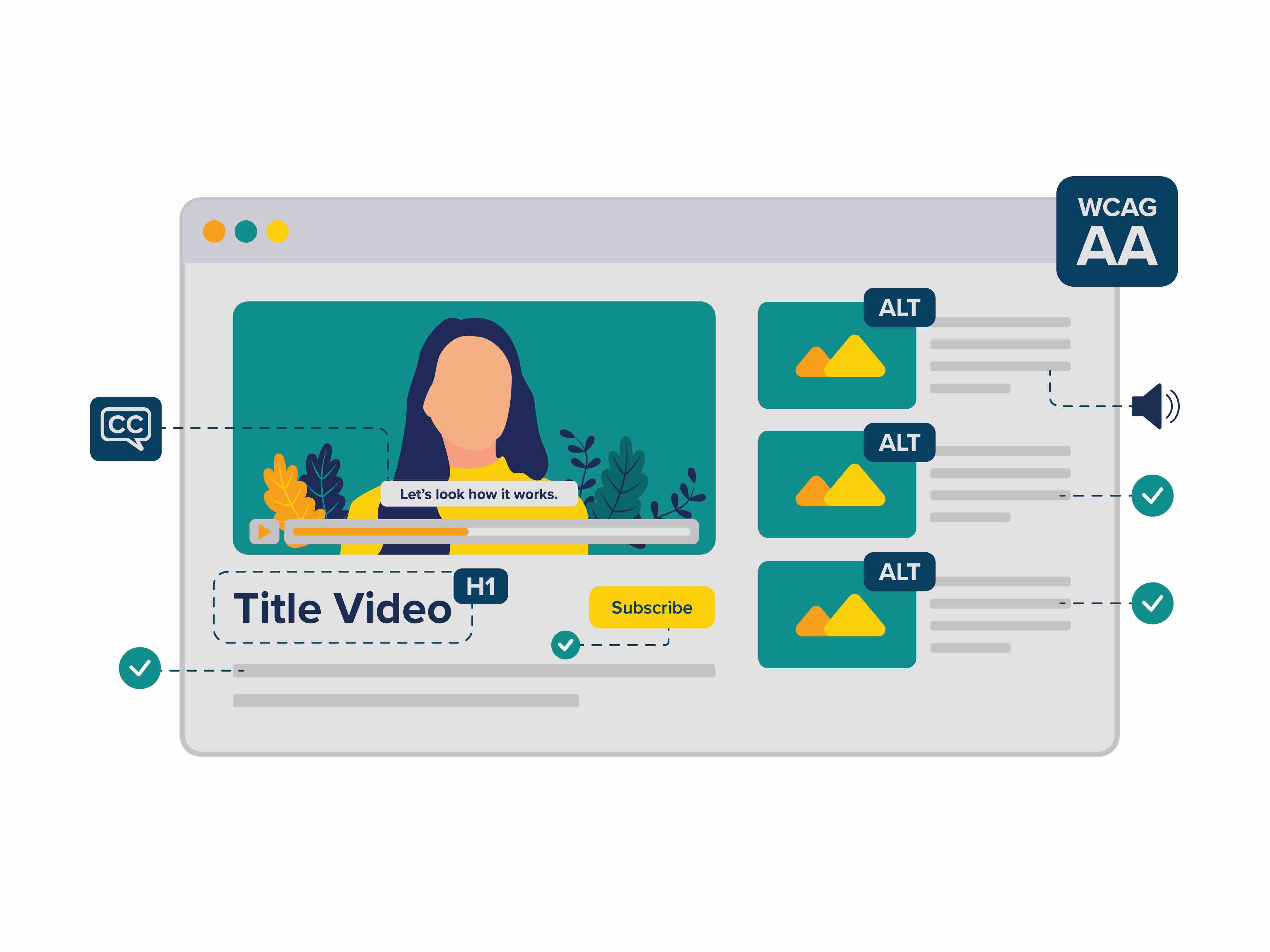
What Is WCAG 2.1 Compliance and Why Should Your Business Actually Care?
If you have ever landed on a website that felt impossible to navigate, you already understand the frustration that millions of users with disabilities experience every single day. WCAG 2.1, which stands for Web Content Accessibility Guidelines version 2.1, is the internationally recognized standard developed by the World Wide Web Consortium to make digital content more accessible to people with visual, auditory, cognitive, and motor impairments. Published as an extension of WCAG 2.0, this version introduced 17 new success criteria, with a particular focus on mobile accessibility and users with low vision and cognitive disabilities. For marketing and creative agencies, and the businesses they serve, understanding WCAG 2.1 is not just about checking a compliance box. It is about building digital experiences that genuinely work for everyone. And frankly, that has real commercial value.
Breaking Down the Four Core Principles of WCAG 2.1
WCAG 2.1 is organized around four foundational principles, often referred to by the acronym POUR. Every success criterion in the guidelines maps back to one of these principles, and they form the backbone of any accessibility audit or remediation effort. The principles are Perceivable, Operable, Understandable, and Robust. Perceivable means information must be presented in ways users can actually detect, whether visually, auditorily, or through assistive technologies. Operable means all interface components and navigation must be functional through various input methods, including keyboard-only navigation. Understandable means content and UI behavior should be predictable and readable. Robust means content must be interpreted reliably by a wide range of assistive technologies, including screen readers and braille displays. These principles are not abstract ideals. Each one carries specific, testable success criteria organized across three conformance levels: Level A, Level AA, and Level AAA. Most businesses, legal frameworks, and industry standards aim for Level AA conformance at minimum.
What WCAG 2.1 Actually Requires From Your Website
When someone says a website is WCAG 2.1 compliant, they typically mean it meets all Level A and Level AA success criteria. In practice, this covers a fairly wide range of technical and design requirements. The new criteria introduced in version 2.1 that agencies and developers frequently deal with include things like ensuring sufficient color contrast ratios, providing text alternatives for non-text content, making sure all functionality is accessible via keyboard without a mouse, supporting reflow so content adapts properly on mobile devices without horizontal scrolling, and avoiding content that flashes more than three times per second to protect users with photosensitive conditions. There are also requirements around input assistance, such as autocomplete attributes for form fields, which may seem minor but carry significant weight for users with cognitive disabilities. For agencies producing landing pages, campaign microsites, e-commerce storefronts, and brand websites, each of these requirements has a direct impact on design and development decisions.
The Business Case for Accessibility in 2026
Here is where the conversation shifts from compliance to strategy. In 2026, accessibility is increasingly being recognized as a brand differentiator, not just a legal obligation. The global market of people with disabilities represents over one billion individuals, and their combined spending power is estimated in the trillions. Ignoring accessibility is not just an ethical oversight. It is leaving revenue on the table. Beyond the market opportunity, there is the legal dimension. Digital accessibility lawsuits have been trending upward for years, and courts in the United States have repeatedly found that websites are subject to the Americans with Disabilities Act. Businesses operating websites, which is essentially every business, face real exposure if their digital properties are not accessible. For marketing and creative agencies advising clients, bringing this conversation forward proactively is a mark of a sophisticated, trustworthy partner.
Key Advantages of WCAG 2.1 Compliance for Agencies and Their Clients
The benefits of achieving and maintaining WCAG 2.1 compliance extend well beyond legal risk mitigation. Agencies that build accessible websites for their clients unlock a range of compounding advantages that are worth understanding in detail.
- Improved organic search performance through better semantic HTML structure and descriptive alt text
- Stronger user experience signals that reduce bounce rates and improve time on site
- Expanded audience reach, particularly among aging demographics with changing sensory or motor capabilitie
- Enhanced brand reputation through demonstrated social responsibility
- Reduced long-term development costs by catching accessibility issues early rather than retrofitting later
- Increased compatibility with assistive technologies, which also improves device compatibility broadly
The overlap between accessibility best practices and technical SEO best practices is not accidental. Search engines interpret websites through mechanisms that closely resemble how assistive technologies read them. Clean heading hierarchies, descriptive link text, properly labeled form elements, and fast-loading responsive designs all serve both accessibility and discoverability simultaneously. That is a meaningful advantage for any marketing agency trying to deliver measurable ROI.
Common Challenges and Drawbacks You Should Know About
It would be misleading to present WCAG 2.1 compliance as a frictionless process, because it is not always. There are genuine challenges that agencies and internal teams encounter, and understanding them upfront leads to better planning. One of the most common friction points is retrofitting accessibility onto existing websites that were not built with it in mind. When accessibility is treated as an afterthought, the remediation effort can be substantial, touching everything from color palettes and typography choices to the underlying component architecture and DOM structure. Another challenge is the dynamic nature of digital content. If a website is regularly updated with new pages, blog posts, campaign assets, or interactive features, maintaining compliance requires ongoing governance, not a one-time audit. Third-party components and plugins introduce another layer of complexity, since an agency may build a fully compliant site that then breaks accessibility standards when a client installs an external widget or form tool. Finally, WCAG 2.1 Level AAA compliance, while aspirational, is often impractical for general websites and is not typically required by law, which creates some ambiguity about where to draw the line.
How Marketing and Creative Agencies Should Approach WCAG 2.1 Implementation
For agencies, the most sustainable approach to WCAG 2.1 is integration, not remediation. Building accessibility into the design system, the development workflow, and the quality assurance process from the start is significantly more efficient than addressing it at the end of a project. This means conducting accessibility reviews during wireframing, not just before launch. It means using automated testing tools like Axe, Lighthouse, or WAVE as part of the development pipeline, while also understanding that automated tools only catch approximately 30 to 40 percent of accessibility issues. Manual testing with screen readers, keyboard navigation testing, and user testing with people who have disabilities are all part of a thorough accessibility program. Agencies should also consider developing a WCAG 2.1 accessibility statement for clients, which documents the conformance level achieved, known limitations, and a contact method for users who experience barriers. This transparency is both good practice and a signal of maturity to clients and their customers.
WCAG 2.1 Compliance and Its Role in Digital Strategy
The most forward-thinking marketing and creative agencies in 2026 are treating accessibility not as a compliance checklist but as a strategic pillar of digital quality. When accessibility is woven into a broader digital strategy, it reinforces performance goals, supports inclusive growth, and reflects the values that modern consumers increasingly expect from brands they support. Clients who invest in accessible digital experiences often find that the improvements made in service of accessibility, cleaner layouts, better contrast, more descriptive content, faster mobile load times, also improve overall conversion rates and customer satisfaction scores. Accessibility and conversion rate optimization share more overlap than most people realize, and that is a compelling story for any agency to bring to a client conversation.
Why Kreativa Group Is the Right Partner for WCAG 2.1 Compliant Web Design
Building accessible, high-performing websites requires more than technical knowledge. It requires a team that understands how design, development, and business outcomes connect. That is exactly what Kreativa Group brings to every engagement. Based in Los Angeles and Miami, Kreativa Group has designed and launched websites for global brands including Sandals Resorts, Porsche, Audi, and BMW, with a track record that includes over two dozen website launches across Webflow, Shopify, and WordPress platforms. Their leadership team has managed digital experiences for multi-billion dollar companies like Newegg, Rakuten, and Fossil Group, and has operated at the startup level with successful exits. To date, Kreativa Group has driven over $200 million in incremental revenue, with an average ROAS above 7x and a 4 percent conversion rate. They are among the top 1 percent of US-based agencies certified as Google Ads, Amazon Ads, Shopify, and Webflow Partner agencies. When it comes to WCAG 2.1 compliance, Kreativa Group treats accessibility as a performance lever, not a formality. If you are ready to build digital experiences that are inclusive, legally sound, and built to convert, visit Kreativa Group's digital marketing and web design agency to learn more about what a results-driven partnership looks like, or take the first step toward a more accessible and effective web presence by scheduling your free website and growth audit with Kreativa Group today.
Frequently Asked Questions About WCAG 2.1 Compliance
What is the difference between WCAG 2.0 and WCAG 2.1?
WCAG 2.1 is a backward-compatible extension of WCAG 2.0, meaning everything required by 2.0 is still required in 2.1. The newer version added 17 additional success criteria that address mobile accessibility, users with low vision, and users with cognitive and learning disabilities. Conforming to WCAG 2.1 automatically means conforming to WCAG 2.0.
Is WCAG 2.1 compliance legally required in the United States?
There is no single federal law in the United States that explicitly mandates WCAG 2.1, but courts have consistently ruled that websites are subject to the Americans with Disabilities Act. Federal agencies and organizations receiving federal funding are required to meet accessibility standards under Section 508, which references WCAG 2.1 Level AA. Businesses operating commercial websites carry legal exposure if their sites are not accessible.
What conformance level should my business aim for?
Most businesses, legal standards, and industry guidelines recommend targeting WCAG 2.1 Level AA conformance. Level A covers only the most basic accessibility requirements, while Level AAA is often impractical to achieve across an entire website. Level AA strikes the right balance between thoroughness and feasibility for most commercial websites.
How long does it take to make a website WCAG 2.1 compliant?
The timeline depends heavily on the size of the website, how it was originally built, and the current state of accessibility. A small website being remediated may take a few weeks. A large e-commerce or enterprise site being retrofitted for accessibility could take several months. Building accessibility into a new site from the beginning is always faster and more cost-effective than remediation.
Can automated tools fully assess WCAG 2.1 compliance?
No. Automated accessibility testing tools like Axe, Lighthouse, and WAVE are valuable and should be part of any workflow, but they typically detect only 30 to 40 percent of accessibility issues. A complete compliance assessment requires manual testing, keyboard navigation checks, screen reader testing, and ideally usability testing with people who have disabilities.
Does WCAG 2.1 compliance affect SEO performance?
Yes, and positively so. Many WCAG 2.1 requirements overlap directly with technical SEO best practices. Proper heading structure, descriptive alternative text for images, accessible link labels, semantic HTML, and fast-loading responsive designs all contribute to better search engine crawlability and improved organic rankings. Accessibility improvements frequently produce measurable SEO gains as a byproduct.
What happens if a third-party plugin breaks my site's accessibility?
This is a common and real challenge. If a third-party tool, such as a chat widget, form builder, or video embed, introduces accessibility barriers, the website owner is still responsible for the user experience. The best approach is to audit third-party components before integrating them and to monitor for accessibility regressions after updates. Working with a development team that understands this risk is essential.
How often should a website be audited for WCAG 2.1 compliance?
Accessibility is not a one-time project. Websites change continuously through new content, design updates, and third-party integrations, all of which can introduce new accessibility issues. A full audit should be conducted at minimum annually, with ongoing automated monitoring in place throughout the year. Any significant site redesign or platform migration should trigger a fresh compliance review.
Does WCAG 2.1 apply to mobile websites and apps?
Yes. One of the primary motivations for WCAG 2.1 over its predecessor was to address gaps in mobile accessibility. Success criteria such as reflow, pointer gestures, target size, and orientation requirements were all added specifically to improve the experience on mobile devices and touch interfaces. Mobile accessibility is a core component of WCAG 2.1 compliance, not an optional consideration.
What is an accessibility statement and does my website need one?
An accessibility statement is a public-facing document that communicates your website's current conformance level, any known accessibility limitations, the standards you have aimed to meet, and how users can contact you if they encounter barriers. While not universally mandated by law in all jurisdictions, publishing an accessibility statement is considered best practice and demonstrates transparency and good faith effort toward inclusive design.